

Words Matter
When it comes to the issue of trust between the United States and Russia, the concept of a "deal" is a non-starter. Legally binding treaties are the coin of the realm. There's a big difference.
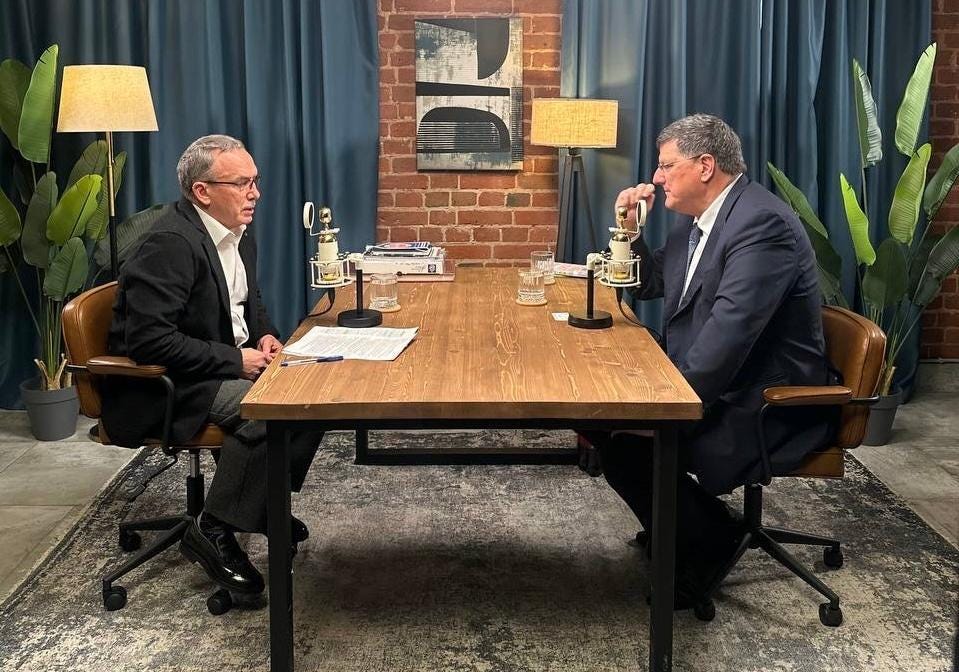
Andrei Ilnitsky is not someone to be trifled with. A retired Lieutenant General of the Russian Armed Forces, Andrei served for 10 years as a Senior Advisor to the Minister of Defense of the Russian Federation, Sergei Shoigu, responsible for formulating and implementing information policy. When Shoigu was replaced by Andrei Belousov as Minister of Defense in May 2025, Andrei stepped down from his position and assumed a more informal role of advisor on political strategy for the Ministry of Defense. Today Andrei is widely published in prestigious military journals, and is a frequent commentor on Russia television. In short, Andrea Ilnitsky is a serious man whose views resonate with the highest levels of the Russian government.
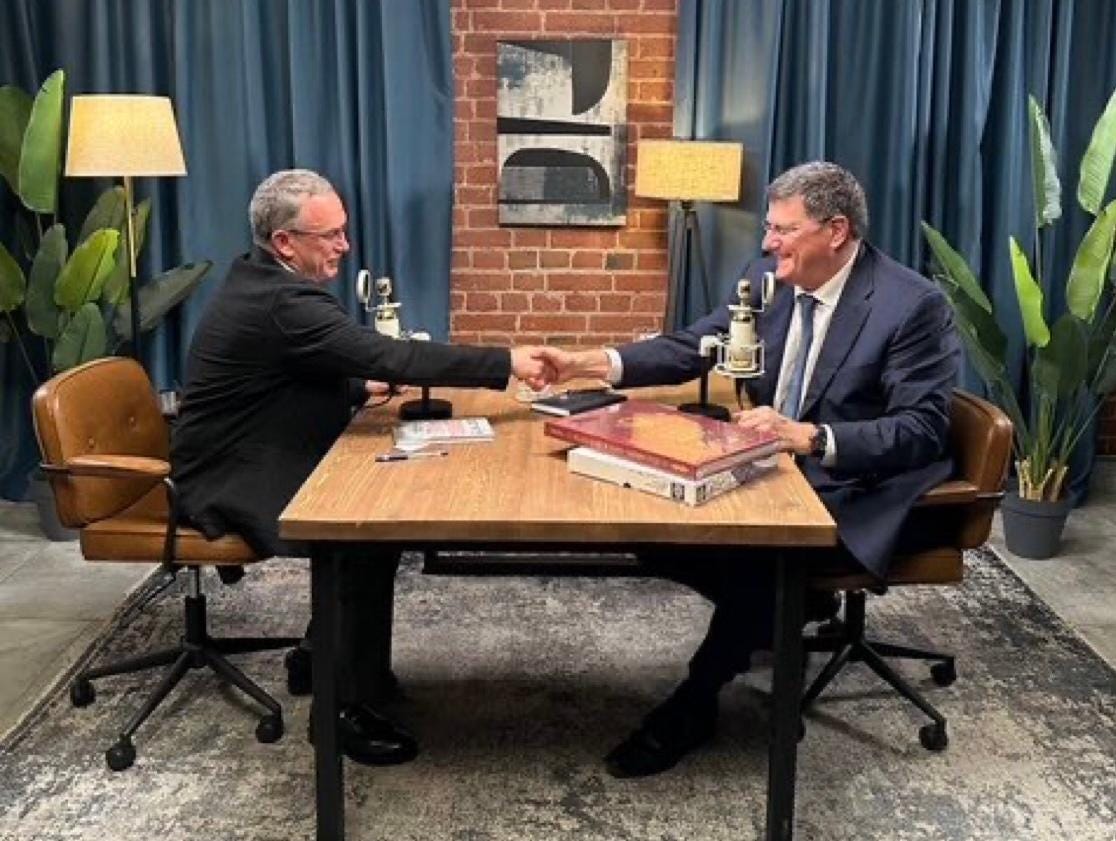
I had the honor and privilege of being able to engage in a frank and open discussion with Andrei Ilnitsky as part of my The Russia House with Scott Ritter podcast. We focused on the prospects for better relations between the United States and Russia in the aftermath of the Alaska Summit, and discussed the prospects of a US-brokered peace agreement between Russia and Ukraine.
Andrei and I parted on good terms—I believe he felt I had asked intelligent questions and showed a modicum of familiarity with the issues of the day and how they are viewed from a Russian perspective. As for me, I soaked in every word—it’s not often one gets the opportunity to probe the mind of a man who directly advised a Russian Minister of Defense for a decade. We exchanged contact information, and promised to stay in touch.
And stay in touch we did. I would read transcripts of Andrei’s appearances on Russian media while translating articles he had previously published in Russian military journals (Andrei was kind enough to provide me with copies of these), while Andrei let me know that he was watching my appearances on YouTube and reading my own articles.
It was in the context of my recent efforts to breath life into the derelict machinery of arms control that Andrei reached out to me to comment on my words and efforts. I had been promoting the idea of reviving the spirit of the Intermediate Nuclear Forces (INF) treaty with regard to the soon-to-be-expired New START treaty, to include highlighting the mantra oft-repeated by President Ronald Reagan, “trust but verify.”
“The crisis of trust between Russia and the US, between the Global South and the West,” Andrei wrote, “may be the greatest crisis of our time. Trust is the object of a mental war. It is destroyed quickly and restored slowly. This is, among other things, what we (you & me) discussed in Moscow.”
Andrei and I spoke in length about this very issue, with an emphasis on the long and difficult path the United States would need to take in order to regain the trust of the Russian people and government in the aftermath of Ukraine.
“Russians are a trusting people,” Andrei noted. “But if we’re deceived, our trust is hard to regain. And no Kirill Dmitrievs [note: the former Goldman Sachs investment banker and current CEO of the Russian Direct Investment Fund, who currently serves as a special envoy for Russian President Vladimir Putin on bettering relations with the United States]—people who are mentally non-Russian—will help here. You have to talk to Russia either honestly or not at all. Minsk 1 and Minsk 2 are difficult and bad lessons, but we’ve learned them. There will be no Minsk 3. I hope so.”
The issue of a “Minsk 3” looms large in the psyche of many Russians today, namely the fear that Russia will once again fall victim to the naive belief that the West is capable of negotiating in good faith, that an agreement means what it says, and is not simply a smokescreen behind which plots are devised and implemented. For Russia, the Minsk 1 and Minsk 2 agreements represent this very sort of nefarious double-dealing.
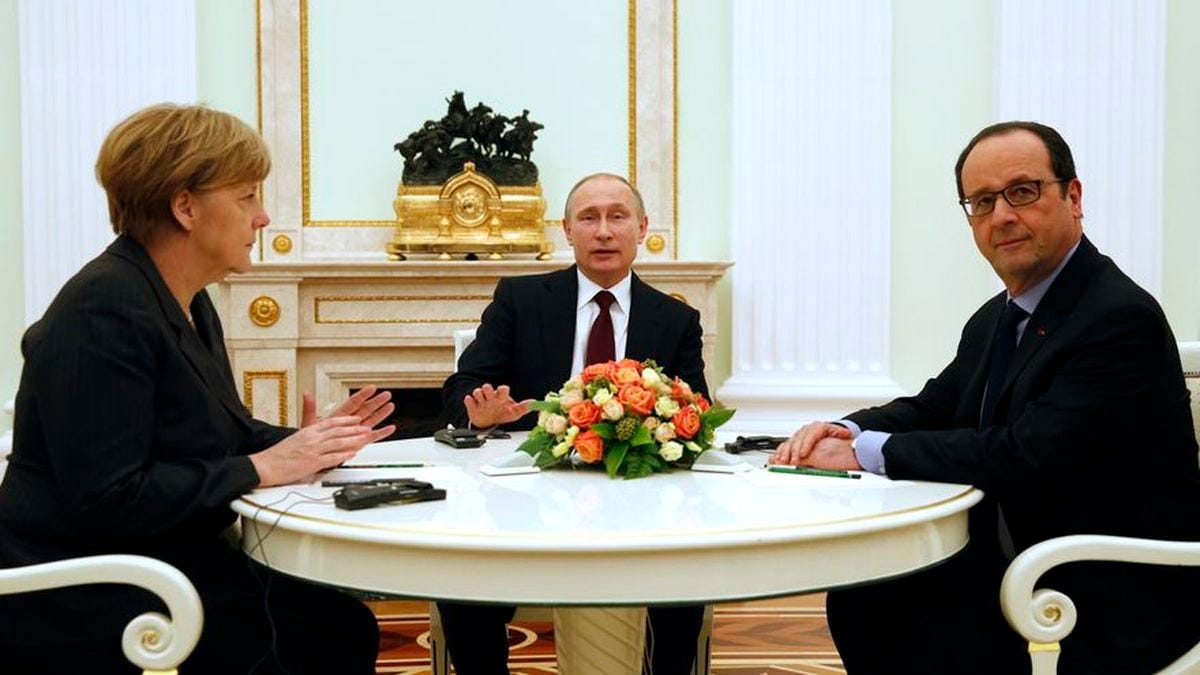
However, one of the main players behind convincing Russian President Vladmir Putin to agree to the Minsk accords, German Chancellor Angela Merkel, admitted in an interview published in Zeit Magazine on December 7, 2022, nearly a year to the day after she stepped down from her post. “The 2014 Minsk Agreement was an attempt to give Ukraine time,” Merkel told the German magazine. “They used that time to get stronger, which you can see today. Ukraine of 2014/15 is not Ukraine of today.” (Similar confessions have been made by the other two parties to the Minsk accords, French President François Hollande and Ukrainian President Petro Poroshenko.)
Angela Merkel personally led the Minsk negotiations between 2014 and 2015 in an effort to stabilize eastern Ukraine. The February 2015 negotiations in particular were important—Merkel was faced with a looming disaster for the Ukrainian army in Debaltseve, where thousands of Ukrainian soldiers were surrounded and facing imminent annihilation at the hands of Russian-backed separatist forces.
Under these circumstances, Merkel, together with Hollande, frantically pushed a diplomatic agreement with Russian President Vladimir Putin—the Minsk accords—which Merkel later admitted was simply a ruse designed to freeze the conflict and buy the Ukrainian military time to reorganize and refit for the purpose of continuing the fight. The agreement, reached on February 15, 2015, included a cease-fire, called for the withdrawal of heavy weapons, and the establishment of a security zone that would be monitored by the Organization for Security and Cooperation in Europe (OSCE). Moreover, President Poroshenko pledged to amend Ukraine’s constitution to allow special status for the Russian-speaking citizens of Donetsk and Luhansk and grant them greater autonomy.
President Putin, reflecting on Merkel’s confession that the Minsk accords were simply a ruse, noted that “We thought we would still be able to agree within the framework of the Minsk peace agreements. What can you say? There is a question of trust.” President Putin reflected on his words, before adding “And trust, of course, is almost at zero.”
As it turned out, Putin stated, “no one was going to fulfil all these Minsk agreements, and the point was only to pump up Ukraine with weapons and prepare it for hostilities. After a statement like that,” the Russian President added, “the question arises of how to negotiate, about what, and is it possible to negotiate with someone, and where are the guarantees. An agreement will have to be reached in the end,” Putin concluded, “all the same. I have said many times that we are ready for these agreements, we are open, but this makes us think who we are dealing with.”
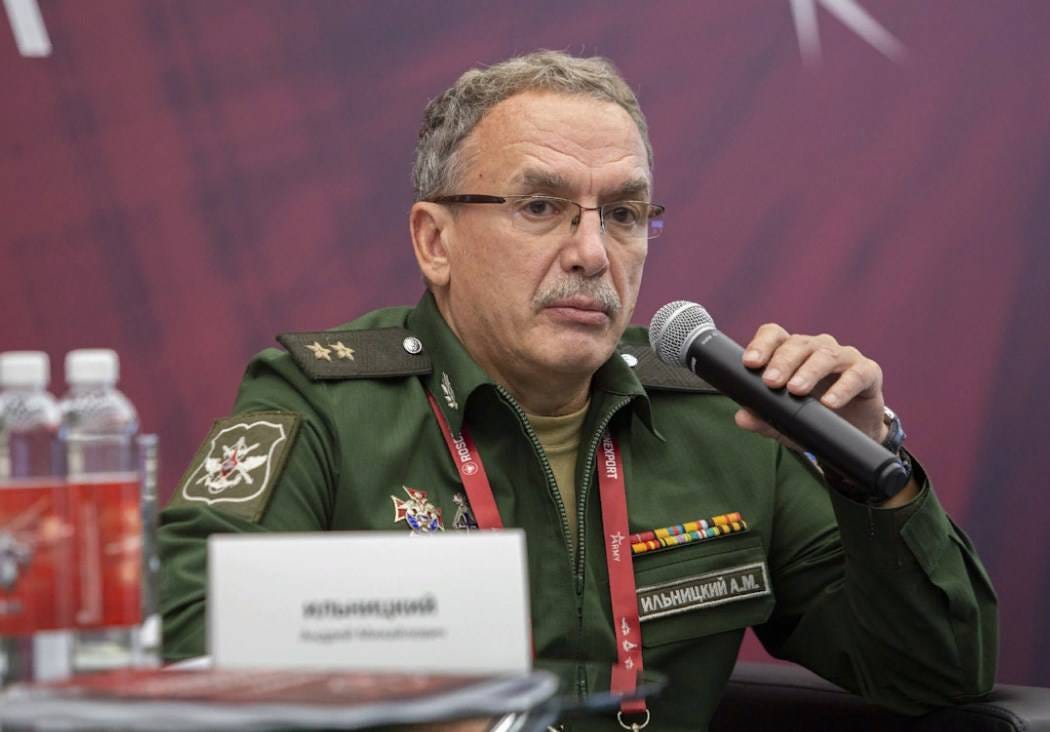
Andrei Ilnitsky is a man of honor, a man of integrity. Today Andrei specializes in information policy. But for him, the concept of betrayal is more than theoretical. He is a highly educated man, having graduated from the Moscow Institute of Physics and Technology (MIPT) From 1982 to 1992, Andrei worked as a research fellow at the 26th Central Research Institute, located in Balashikha, in the Moscow Oblast. The 26th Central Research Institute in an interservice institution dedicated to comprehensive research on issues pertaining to military infrastructure, specialized military construction and fortification complexes, and other facilities for the services of the Russian armed forces.
From 1992-2003, Andrei was one of the senior editors with the ASST Publishing Group, one of the two largest publishing houses in Russia. Near the end of his time with ASST, Andrei enrolled in the Moscow School of Political Studies, from which he graduated in 2002. He is a member of the Moscow Writer’s Union.
After graduating from the Moscow School of Political Studies, Andrei became involved with Open Russia, a political organization founded by the Russian Oligarch Mikhail Khodorkovsky and shareholder from Yukos, an oil and gas company Khodorkovsky built largely on the basis of a controversial “loans for shares” auction program that exploited the hard economic reality of many Russians. Open Russia underwrote philanthropic projects, including educational projects for young people, the Federation of Internet Education, the Club of Regional Journalism and projects of human rights NGO’s. Andrei oversaw leadership and regional projects on behalf of Open Russia.
Open Russia met its demise in 2006. In October 2003 Khodorkovsky was arrested on charges of tax fraud. Starting in 2004, the Russian government began seizing the assets of Yukos, before dismantling the company entirely in 2006. The fate of Open Russia paralleled that of Yukos, and with its source of funding terminated, Open Russia disbanded.
Open Russia ostensibly operated on a reform agenda designed to build and strengthen civil society. During its time of operation, Open Russia had extensive interactions with NGO’s funded by western nations, including the United States. Andrei was on record during this time for expressing admiration for the United States, calling it an “amazing country with colossal energy” that had been “created by people who believe in God, but above all in themselves.”
Andrei’s impression of the United States, and the West in general, appears to have been dampened by the realities associated with his experience as part of Open Russia. Rather than promoting pro-Russian values, Open Russia had been used by Khodorkovsky and his allies to undermine public confidence in Russian institutions, culture and self-confidence. In 2006, Andrei joined United Russia, the political movement and party most closely associated with Russian President Vladimir Putin. As a member of United Russia, Andrei became heavily involved in the affairs of the Moscow Region, leading a number of civic initiatives that radically transformed the political and social lives of Muscovites for the better. Andrei was recognized for his work by both Moscow regional authorities, who awarded him with the Badge of St. Sergius of Radonezh for high services to the Moscow Oblast (Region), and the Russian Government, which awarded him the Medal of the Order “For Merit to the Fatherland”, 2nd Class.
Around 2010, Andrei became acquainted with Sergei Shoigu, a close confidant of Russian President Vladimir Putin, first in his role as the Minister of Emergency Situations, and briefly as the governor of the Moscow Oblast. In 2012, Shoigu was appointed as the Minister of Defense. At the end of 2014, Andrei resigned from his duties with the Moscow Oblast, and in March 2015 took up his position as a senior advisor for information policy with the Ministry of Defense. In 2017 Andrei graduated from the Military Academy of the General Staff of the Armed Forces of the Russian Federation, paving the way for his promotion to Lieutenant General.
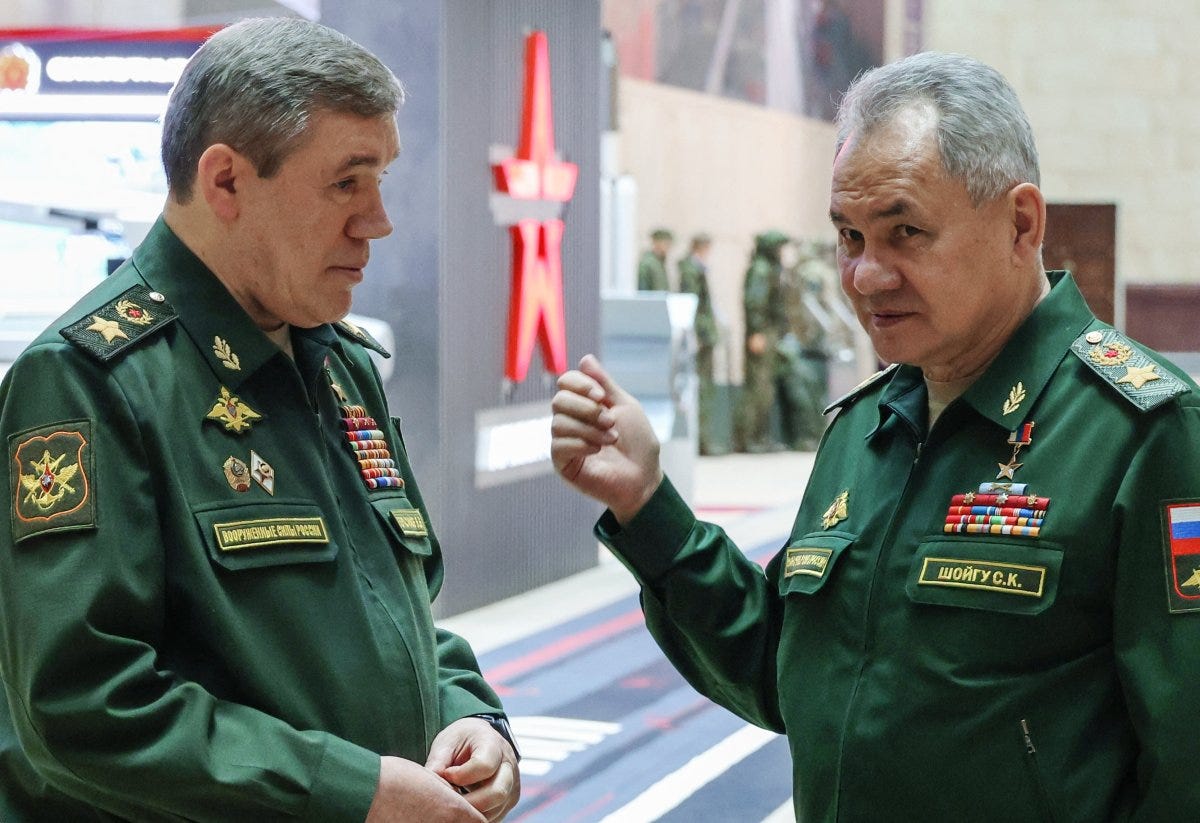
Andrei arrived at the Ministry of Defense in a time of great controversy. On 26 February 2013, the chief of the Russian General Staff, General Valery Gerasimov, published an article entitled “The Value of Science Is in the Foresight: New Challenges Demand Rethinking the Forms and Methods of Carrying out Combat Operations” in Voyenno-Promyshlennyy Kurier (VPK) (Military-Industrial Courier). In this article, Gerasimov set forth his view of the operational environment that the Russian military found itself in, and the nature of future war.
In his article, Gerasimov concluded that the pattern of compelled US-sponsored regime change had transitioned away from overt military invasion (i.e., Operation Desert Storm) to a new kind of “hybrid warfare” which saw the US installing political opposition in targeted countries using mainstream media outlets like CNN and BBC which acted like state-control propaganda organizations, the Internet and social media (“soft power”, or “digital democracy”), and nongovernmental organizations (NGOs).
Once the US was able to successfully lay the foundation of internal political dissent, separatism, and/or social strife, the targeted government would find it increasingly difficult to maintain order, and the US would take advantage of deteriorating security environments to empower separatist movements, operating in conjunction with covert special operations and (if needed) conventional military power, to create the conditions of political collapse which would be accelerated by the imposition of economic and political sanctions by the US. The ultimate goal would be to create the conditions for regime change, where a government not to the liking of the US would be replaced by one that would do the bidding of the US.
While General Gerasimov wrote of “indirect and asymmetrical methods” in describing what was clearly his articulation of a new kind of warfare being waged by the West, western analysts misconstrued Gerasimov’s intent in writing his article as an expression of a new kind of Russian warfare, which they named “hybrid warfare.” This misdirection took on more weight following the events of the Maidan “revolution” in January-February 2014, and the subsequent Russian seizure and annexation of Crimea. Western analysts tried to use these events as a clear illustration of Russian-style “hybris warfare” in action.
But, in fact, it was the opposite that was true. As Gerasimov pointed out, the tactics used by the West in Ukraine in 2014 and onward followed a classic pattern of behavior that had been seen in Iraq, Yugoslavia, Syria, Iran, Libya—and Ukraine and Russia. The role played by NGO’s in facilitating the “soft power” actions was singled out by Gerasimov to be a major factor in the success of “hybrid warfare.”
Andrei assumed his duties as a senior advisor for information policy in the midst of the controversy generated by Gerasimov’s article. While Andrei did not discuss this aspect of his personal evolution with me, the patterns of behavior outlined by General Gerasimov in outlining his theory of western “indirect and asymmetrical warfare” would logically have resonated with Andrei, given his front-seat role in facilitating the “soft power” actions of Open Russia from 2002-2006.
What is known is that in March of 2021, Andrei gave an interview to the military magazine Arsenal Otechestva (Arsenal of the Fatherland) where he accused the United States, and the West in general, of waging what he called a “mental war” against Russia.
“If in classical wars,” Andrei said, “the goal is to destroy the enemy’s manpower, in modern cyber wars to destroy the enemy’s infrastructure, then the goal of the new war is to destroy self-consciousness, to change the civilizational basis of the enemy’s society. I would call this type of war ‘mental.’ Moreover, while manpower and infrastructure can be restored, the evolution of consciousness cannot be reversed, especially since the consequences of this ‘mental’ war do not appear immediately but only after at least a generation, when it will be impossible to fix something.”
“Mental War” appears to be a corollary to Gerasimov’s “indirect and asymmetrical warfare”, another tool used by the collective West to tear down Russian society from within. Far from being the far-fetched idea of someone on the political fringe of Russian power, Andrei’s concept of “Mental War” was endorsed by Kremlin spokesman Dmitry Peskov, who noted that there was “[a] deliberate policy to contain and keep Russia down is being pursued. It is absolutely constant and visible to the naked eye.”
When viewed in the context of Andrei’s evolution as a political thinker, one can discern a direct connection between his concept of “mental war”, and his concerns regarding the trustworthiness of the United States.
To someone possessing Andrei’s discerning intellect, a term like “mental warfare” would not be chosen lightly.
All words have meaning.
This is especially true in the context of what people are calling a “peace deal” between Russia and the United States, a concept furthered by the fact that the Russians and American sides have put two “dealmakers” front and center when it comes to crafting an agreement on Ukraine—the aforementioned Kirill Dmitriev, and Steve Witkoff, a New York City real estate mogul and close personal friend of Donald Trump.
The problematic nature of the term “deal” was spelled out to me in ANdrei’s most recent communication.
“And one more thing,” Andrei noted. “In the US-Russia dialogue, tone, subtext, and words are very important. The word ‘deal’ has a negative connotation in Russian. It suggests some kind of trickery and deception. Agreements and trust are not achieved through deals.”
Words have meaning.
“Keep this in mind,” Andrei asked, “and please explain it to the Americans.”
I’ll try my best.
When it comes to arms control, Russia isn’t looking to engage in a real estate transaction.
Russia isn’t interested in gaining an advantage through sleight of hand (or negotiation.)
We are in the situation we face today because the United States has treated arms control like a transactional exercise.
We withdrew from the ABM treaty because it was inconvenient to those who believed in the myth of a perfect missile shield.
With withdrew from the INF treaty because it was inconvenient to our need to match the Chinese (who were not party to the treaty) capabilities in intermediate-range missiles.
We negotiated the New START treaty in bad faith, deliberately obscuring definitions that could be reimagined down the road when issues of compliance and compliance verification arose.
Lying about our willingness to engage in meaningful negotiations about missile defense once the New START treaty was successfully ratified.
The Russians aren’t looking for a good “deal”, because "deals” are, by their very nature, subjective, depending on situational factors that change over time.
Russia’s Strategic Nuclear Deterrence capabilities are considered essential for the survival of the Russian nation and civilization, especially in a time when Russia’s enemies are seeking the strategic defeat of Russia using both “hybrid warfare” and “mental war.”
There is no “deal” possible that would have Russia sacrifice the one thing that guarantees its ability to defeat the external threats posed by the collective West and their stratagem of strategically defeating Russia.
Now let’s look at the “peace deal” the Trump administration is dangling before the Russian nation.
The “deal” hinges on a yet-to-be defined economic relationship which seeks to link the Russian and American economies through a program of investments and joint endeavors designed to promote the kind of connectivity that serves as a de facto security guarantee, a notion premised on the concept that nations so closely linked economically would be loath to go to war against one another.
The problem, however, is that the premise of such a deal—Russia opening itself up to significant investments by foreign partners who only recently were seeking Russia’s strategic defeat—are activities which appear to be purpose built for the kind of “hybrid warfare” and “mental war” that Gerasimov and Andrei, respectively, warned about.
Russia doesn’t want a “deal.”
Russia wants a binding treaty backed by fool-proof guarantees.
And therein lies the rub.
Words matter.
Because words have meaning.
America wants to conflate the notion of a “deal” with the substance of a treaty.
Russia knows better, because it has been on the receiving end of American (and western) duplicity for too long.
“Trust, but verify” sounds good when spoken.
But put those words down in writing, and the concept becomes inherently problematic.
“Russians are a trusting people,” Andrei had written to me. “But if we’re deceived, our trust is hard to regain.”
Its time to wake up to a harsh reality, America.
If we want better relations with Russia, if we want a lasting peace in Ukraine, if we want meaningful arms control agreements, then we are going to have to win back the trust of the Russian people.
And it is going to take a considerable amount of good-faith effort to win back the trust of a people whom we have consistently betrayed over the course of the past several decades.
There can never be an ethical arrangement made with the stupid, infantile hustler and money-driven schlockmeister and shmata dealer, Trump. His whole persona is built on fraud, bullying, and cheap trickery that only ever works with thieves and pimps of the same ilk.
Thank you, Scott for this essay on trust. Unfortunately, as Lavrov has said, America is not “agreement-capable.” Both because, as you have previously noted, they always lie, and equally important, the constant administrative churn every four years resulting in no consistent governance - any treaty can be tossed out, witness the Pairs climate accord and the Iran nuclear deal. Until America learns to develop a true system of government based on meritocracy and truth (similar to China and Russia), there is no entity there which can earn trust with any other nation.