

Kill the Zombie
President Erdogan needs to take a lesson from Omer Halisdemir when it comes to defending Turkey.
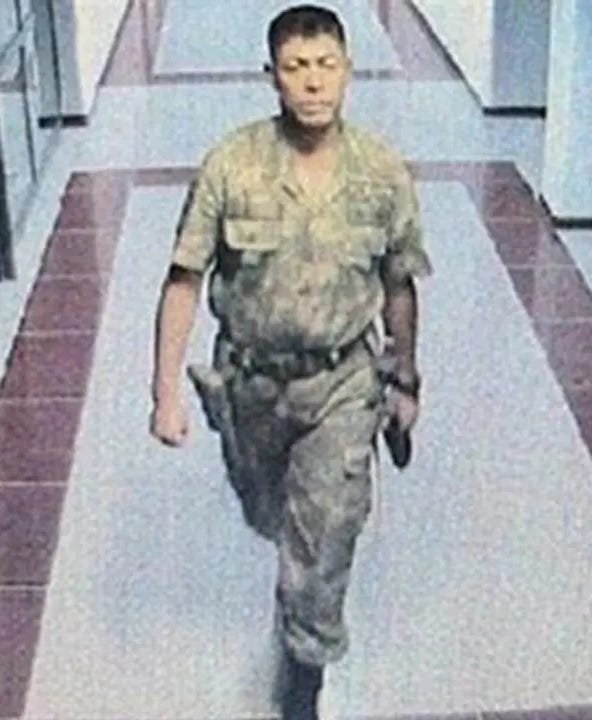
Omar Halisdemir is not a name that resonates with many Americans when they think of Turkey. And yet, because of his heroic actions on the night of July 15, 2016, President Recep Erdogan, the democratically elected leader of Turkey, was able to survive a coup initiated against him by pro-NATO members of the Turkish armed forces. That night, the coup plotters attempted to seize control of the Turkish state. The Deputy Commander of the Special Forces, Brigadier General Semih Terzi, had been ordered by the coup leadership to capture the Special Forces Command headquarters in Gölbaşı, a municipality of the greater Ankara region located in the southern reaches of the Turkish capital. From here Terzi would direct the actions of Turkish military forces as they sought to remove President Recep Erdogan from power. At the time, Terzi was in charge of Turkish special operations forces stationed along the Syria border, and was overseeing the operations of the 1st Special Operations Brigade in the Turkish city of Silopi. Terzi handpicked 40 commandos and boarded a helicopter that would fly them to Gölbaşı.
While Terzi and his team of putschists were enroute, the commander of the Turkish Special Operations Forces, Major General Zekai Aksakallı, was busy trying to nip the coup in the bud. Aksakallı was on his way to the Presidential Palace when his vehicle was ambushed by three other vehicles. Aksakallı had been speaking to Hakan Fidan, the head of the Turkish Intelligence Organization, about the possibility of a coup. Once he escaped the ambush, Zekai Aksakallı made a series of phone calls as he made his way back to Gölbaşı. Aksakallı ascertained that senior officers of the Special Forces were involved in the plot. He called the head of his personal security detachment, and ordered him to assemble loyal soldiers in an effort to defend the headquarters from the coup plotters.
When Aksakallı found out that Terzi was on his way to Gölbaşı, he personally contacted Senior Sergeant Major Omar Halisdemir, a trusted member of his scurity detail who was on duty that night. As Aksakallı noted afterwards, “I told him to ‘shoot Semih Terzi, who is a traitor and coup plotter, in the name of our homeland and nation, and that this would lead to martyrdom, and to forgive me.’ He (Omar) replied, ‘I will forgive you until the end, my commander.’ We made peace.”
The security camera footage from the Special Forces Headquarters recorded what happened next: As the helicopter carrying Terzi and his commando team landed, Omar Halisdemir drew his service pistol and walked confidently toward the headquarters entrance. As Terzi and his team approached the entrance, Omar Halisdemir advanced toward them, and then raised his pistol, firing three shots into Terzi’s head. The commandos then fired on Omar Halisdemir, striking him with 15 bullets. Gravely wounded, Omar was finished off with two additional bullets. Terzi died soon afterwards from his wounds.
The coup never recovered from Terzi’s death. A Special Forces team aligned with the coup plotters had captured Turkish Chief of Staff Gen. Hulusi Akar and other officers loyal to President Erdogan, and had taken refuge in Akıncı Air Base, located outside Ankara, holding Akar and the others hostage. Major General Zekai Aksakallı was able to rally a team of loyal Special Forces soldiers and neutralize Terzi’s demoralized team. Once the Special Forces Headquarters was secure, Aksakallı then led a rescue mission to Akıncı Air Base, where he freed Hulusi Akar and the other hostages. Upon returning to Gölbaşı, Aksakallı saw Omar Halisdemir’s body on the ground. The hardened special forces commander fell to his knees and kissed his loyal soldier on the forehead, calling him “my hero.”
Omar Halisdemir is a Turkish hero.
One man, filled with patriotic devotion, sacrificed his life to stop a threat to his nation.
It is a lesson all of Turkey should heed, especially when considering current events.
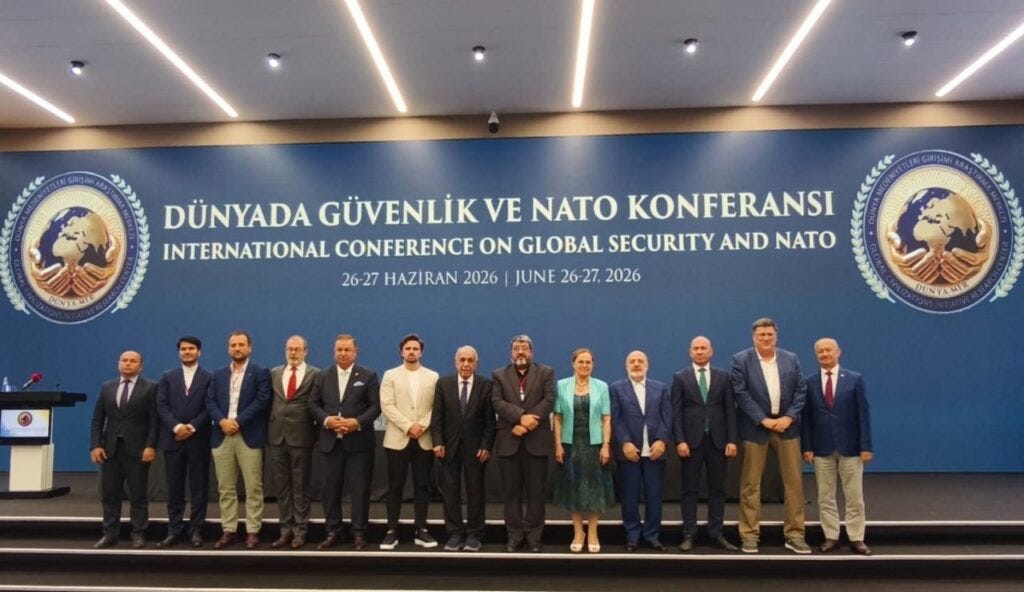
I recently participated in a conference organized by the World Civilizations Initiative Research Center on “Global Security and NATO”, where I joined a distinguished list of participants comprised of retired military officers, political officials, and esteemed academics from ten different nations. The conference participants touched upon a wide variety of topics relating to the nature of the NATO alliance and Turkey’s role in such. I have already written about my participation in the conference.
I was anticipating a strong anti-NATO sentiment among the participants, given the overall thematic of the conference and the political inclinations of the organizers, who represent the Vatan, or Patriots, Party, a pro-Kemalist movement loyal to President Recep Erdogan which is strongly pro-China and pro-Russia as well as anti-American and anti-NATO. But what I witnessed went far beyond simple America- and NATO-bashing. The conference participants treated the topic and their audience, which reached well beyond strict party lines, with respect, providing sound intellectual reasoning for the positions they took.
I myself was very taken in by the presentation of retired Turkish Army Brigadier General Haldun Solmazturk, a man whose military resume boasts a wide-range of experiences and commands that transect the NATO experience. General Solmazturk highlighted two critical aspects of the NATO Charter, namely Article 5, which focuses on the issue of collective defense, and Article 4, which mandates consultation between the NATO collective before critical decisions can be made.
As General Solmazturk noted in his remarks, “Following the terrorist attacks of September 11, the United States immediately invoked Article 5, and all NATO members expressed solidarity. This opened the way for subsequent military operations in Afghanistan, Libya, Iraq, and Syria.
Afghanistan illustrates the problem clearly. NATO allies supported American policy there for more than twenty years. Yet when Washington decided to negotiate directly with the Taliban and eventually withdraw, it did so without meaningful consultation with its allies. After making its own decisions, the United States simply informed the Alliance, leaving all NATO members with no alternative but to withdraw.”
In short, the United States was quick to invoke Article 5 in order to lure NATO into Afghanistan, but ignored altogether its obligations under Article 4 when it came to exiting Afghanistan.
Today, the United States seeks to invoke Article 5-like obligations upon the NATO collective when it comes to its ongoing conflict with Iran. The US-Iran War, however, was initiated unilaterally by the United States, and as such fails to meet even the basic criterion of collective self defense upon which NATO’s Article 5 commitments are derived. Moreover, the US-Iran conflict was initiated without any consultation among America’s NATO allies, totally obviating the consultative requirements set forth under Article 4 of the NATO Charter.
“Contrary to common belief,” General Solmazturk observed, “Article 5 does not create an automatic obligation for every ally to deploy troops or military assets whenever another member is attacked. Each government retains sovereign authority to determine its own response. In fact, previous crises have demonstrated that allies may choose not to participate militarily.” General Solmazturk highlighted this point by citing US President Donald Trump who during his first NATO Summit in 2017 deliberately omitted any explicit reference to Article 5, despite the fact that it appeared in his prepared remarks.
“Today,” General Solmazturk noted, “several American officials argue that many NATO members have become overly cautious, describing the Alliance as a ‘paper tiger.’ During recent NATO defense meetings, senior U.S. officials have argued that NATO should evolve into a force possessing genuine military capabilities and prepared for direct intervention”, a phenomenon General Solmazturk describes as—what I describe as “NATO 3.0”.
“If this vision materializes under current American leadership,” General Solmazturk continued, “NATO 3.0 risks becoming an organization with diminishing respect for legal rules, weakened consultation mechanisms, and increasingly centralized military decision-making under U.S. leadership. Such a development would offer little hope for peace and stability across Eurasia or the North Atlantic region.”
General Solmazturk concluded his remarks by stating “It should never be forgotten that NATO is not an entity separate from its members. Every NATO decision requires unanimous approval. Without the consent of the Turkish government, the Turkish Armed Forces, and Turkey’s representatives, NATO cannot adopt any decision or take any action. The same principle applies equally to the United States, France, Germany, and every other member.”
In his words, one care hear the echo of national duty and responsibility of the sort that drove Omar Halisdemir to commit his act of heroism on that fateful July 15 night in 2016.
The United States and NATO may make demands on Turkey.
But national duty requires Turkey to agree to these demands prior to their being called upon for implementation.
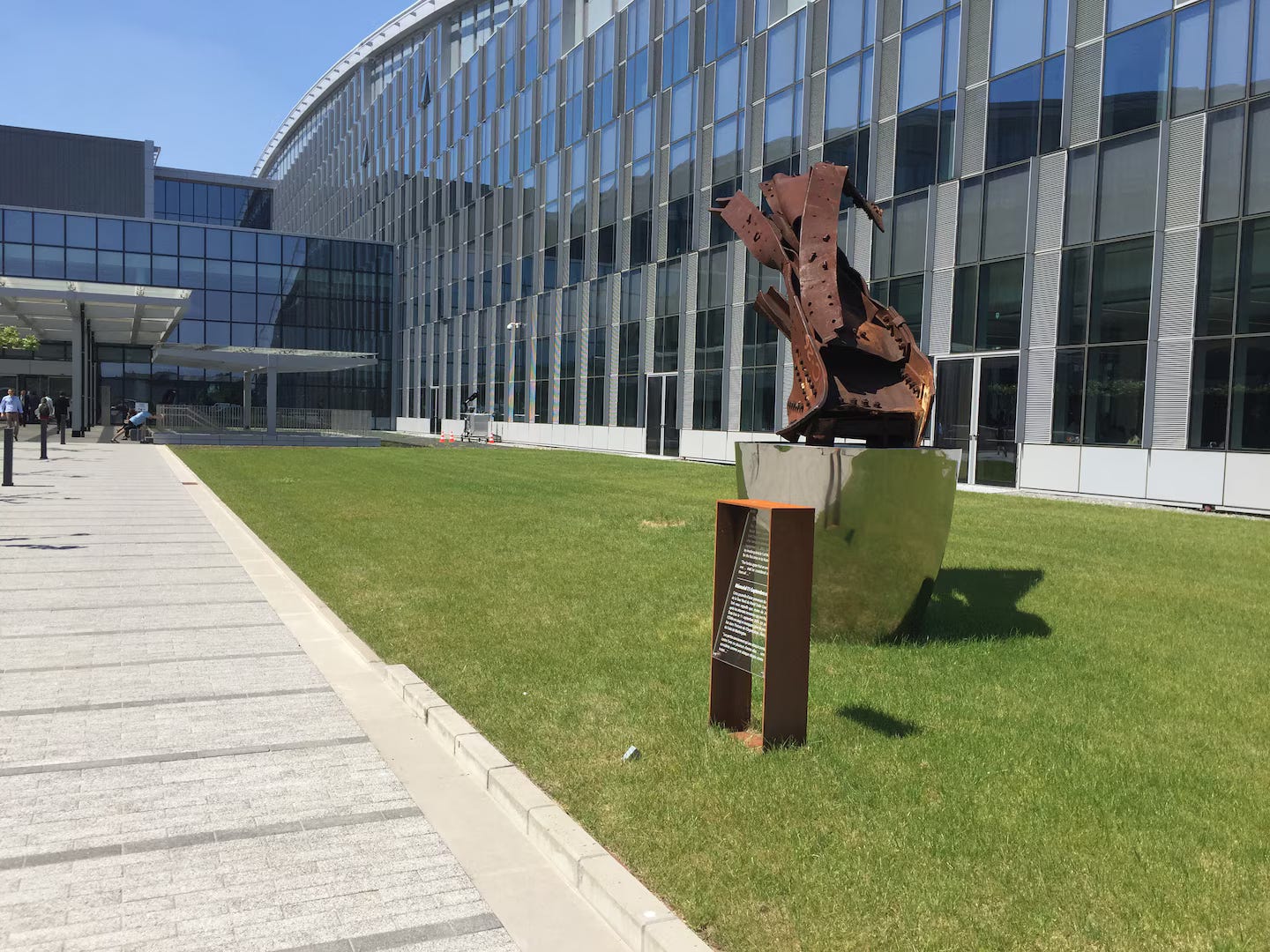
I was also struck by the comments made by Dogan Bekin, a Member of the Turkish Parliament for Istanbul from the New Welfare Party.
“When Turkey joined NATO in the early 1950s,” Mr. Bekin noted, “it paid a significant price for its membership. Shortly after the Alliance was founded, Turkey applied to become a member. However, we should not overlook the fact that its first three applications were rejected, and that Turkey was not admitted until 1952, following the Korean War. At the time, it was made abundantly clear that Turkey first had to prove its worth before it could be accepted into the Alliance. The Korean War was therefore regarded by Ankara as a historic opportunity. On 26 July 1950, by a decision of the Council of Ministers, Turkey became the second country after the United States to send troops to Korea. Accordingly, a Turkish combat brigade of approximately 4,500 soldiers was placed under the command of the United Nations.”
The saga of the Turkish Brigade in Korea is largely unknown to Americans. The Turks arrived in Korea just as the Chinese were beginning a massive counterattack that would end up pushing US and United Nations forces back from the Yalu River to positions south of the 38th parallel, the original line of demarcation separating North and South Korea. There was very little effort made to coordinate with the Turks by either the US or United Nations commands, and the Turks were thrown into battle with little understanding about what they were supposed to accomplish. Indeed, as the Turks arrived on the battlefield, the US forces they were assigned to support—the 25th Infantry Division—were in full retreat. The Turkish Brigade was commanded by Brigadier General Tahsin Yazici, a grizzled veteran of the Gallipoli campaign of the First World War. The Turks, ever aggressive, kept advancing, until they found themselves well out in front of the US-UN positions, surrounded by the Chinese army.
David Hackworth, the most highly decorated soldier in US Army history, recalled how he found himself with the Turks during this precarious time. He was struck by the fearless character of the Turkish soldiers and their leaders, who rather than fall into despair over being out of ammunition and surrounded deep behind enemy lines, relished the opportunity to attack the Chinese soldiers with only their bayonets and long knives. The battle of Wawon, fought in the bitter cold of November 1950, shortly after the Turks landed in Korea, was the first action of the Turkish Brigade. Surrounded by the Chinese, the Turks refused to surrender, launching themselves in desperate bayonet attacks against dug-in Chinese positions, eventually breaking free of their encirclement and, in doing so, delaying the Chinese advance long enough to allow the US Army’s 8th Corps to successfully withdraw. The Turkish Brigade suffered .
My father was stationed in Turkey from 1975-1977, and on occasion we would join the local rod and gun club for a hunting expedition that would take us deep into rural Turkey. On several occasions we would be hosted for lunch by a small Turkish village. When the villagers found out they had American visitors, the word was sent out to the shepherds in the hills. Soon we were joined by hardy men in their mid-to-late 40’s, who had donned their military uniforms. They were veterans of the Turkish Brigade who had fought side by side with American forces in Korea. Their pride of service was evident in their eyes, as was their unabashed joy at being reunited with Americans for the first time in nearly a quarter century.
You could see in their eyes the pride of service, and the pride of being Turks, that glistened in the eyes of Omar Halisdemir as he advanced to his inevitable death on the night of July 15, 2016.
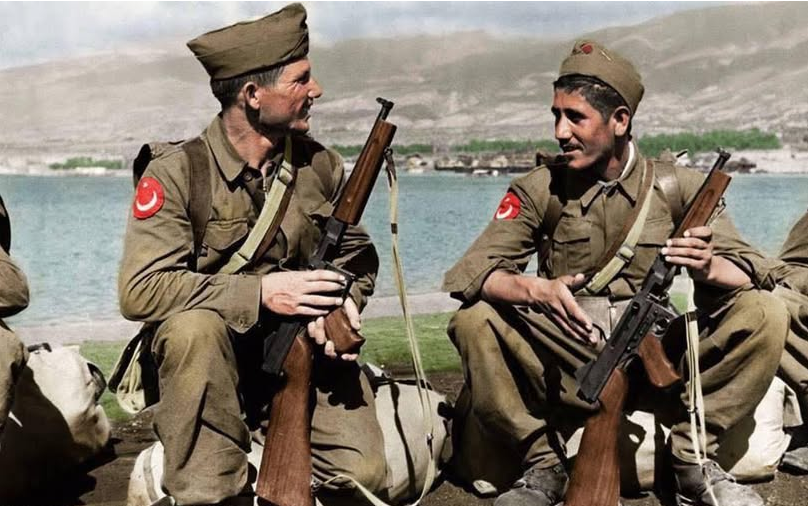
And how did we treat such unrequited loyalty?
Through betrayal.
Turkey earned its NATO membership in 1952 with the blood of the Turkish Brigade in Korea (some 15,000 Turkish soldiers served with the Brigade in Korea, of whom 721 were killed in action, 2,111 wounded, and 168 listed as missing in action, an astounding 20% casualty rate.)
Eight years later Turkey found itself on the front lines of the Cold War between the United States and the Soviet Union. In 1960 Turkey and the United States negotiated a secret agreement which saw Turkey agree to the deployment of US nuclear-armed Jupiter missiles on Turkish soil. This was done on a consultative basis, under the framework of NATO. And yet in 1962 the United States, caught up in the Cuban Missile Crisis, the Jupiter missiles were dismantled and withdrawn from Turkey without any consultation.
“A similar situation exists today with the Kürecik early-warning radar system in eastern Turkey”, Dogan Bekin noted in his remarks. “Although officially presented as part of NATO’s missile defense architecture, the system effectively serves Israel’s strategic security interests. During the Obama administration, Ankara came under considerable pressure to approve its deployment.”
Mr Bekin observed that “At the time, Turkish officials assured the public that although the radar system belonged to the United States, operational control would remain in Turkish hands. However, recent regional crises have demonstrated that the system contributes little to Turkey’s own security interests while significantly enhancing Israel’s strategic defense network. Similar radar installations have been established in Qatar and Israel, forming an integrated regional system.”
The Kürecik early-warning radar system was used extensively during the US-Israeli War with Iran, without any consultation with the Turkish government.
This is the true face of NATO and the US when it comes to Turkey.
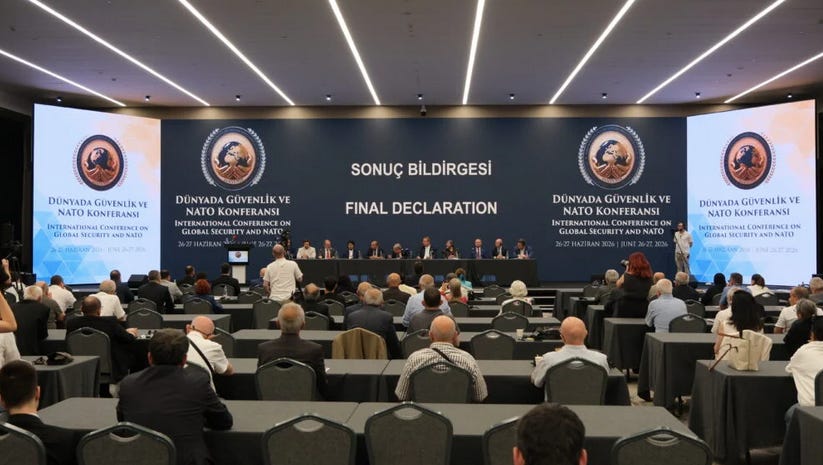
The final declaration of the Global Security and NATO Conference contained several common conclusions, including the following conclusions:
Considering the ongoing crisis and disintegration within the Atlantic system, it would not be surprising to foresee that the NATO Summit to be held in Ankara on July 7-8 could become NATO’s final summit.
The efforts undertaken by the United States to direct and dominate other NATO member states through the alliance have made NATO increasingly unsustainable in an emerging multipolar world which, if this trend continues, will make the world an increasingly insecure place.
Turkey’s withdrawal from NATO and its future participation in the existing Iranian-Russian-Chinese partnership that has emerged following the US-Iranian war is the best course of action for Turkey, strengthening its ability to contribute to the future of humanity and strengthen this new ..partnership’s ability to deter future threats to global security.
Turkey should premise its future security on membership in the Russia-Iran-China axis, noting that any effort on the part of Turkey to seek a greater role in a declining NATO would only result in Turkey assuming a larger burden of NATO’s pending collapse.
The disintegration taking place within the Atlantic system is accompanied by a process of moral decline (the conference members repeatedly referred to this phenomenon as “the Epstein effect”) that is eroding the strength of younger generations, thereby affecting the long-term future of society.
Humanity is in urgent need of a new civilizational center, which is emerging today from the East and the Global South, that will replace the declining and failing Atlantic civilization.
The declaration contains important words which are attached to sincere beliefs. However, if these words and beliefs are not acted on, then all the conference succeeded in doing was to generate some hot air and warm feelings.
The world needs so much more.
In a week’s time Turkey will find itself invaded by a force far more dangerous than the 40-strong commando team led by Brigadier Semih Terzi that had been tasked with seizing control of the Turkish Special Forces headquarters on July 15, 2016 which Omer
The NATO collective is seeking to trap Turkey into a war with Russia citing Article 5 conditions that simply do not exist.
Turkey knows that it is Germany, France, the United Kingdom and the United States that are engaged in a proxy war with Russia by providing weapons and intelligence to Ukraine for the express purpose of attacking the Russian strategic depth.
This makes these nations active participants in a conflict that has neither the sanction of the United Nations nor the agreement of NATO.
And yet if Russian responds—an outcome which seems likely at this juncture—NATO will cite Article 5 and demand Turkey come to its assistance.
Despite the fact that Turkey has not been consulted about this looming war or its root causes.
NATO will come to Ankara demanding that Turkey assume an aggressive posture toward Russia at a time when the Turkish President has openly articulated in favor of a negotiated end to the Russian-Ukrainian conflict.
“NATO is experiencing brain death.”
This quote from French President Macron accurately reflects the Zombie-like reality of the 80-year old Trans-Atlantic alliance.
Today the NATO Zombie is threatening Turkey’s existential survival.
When the time came for Omer Halisdemir to come to the defense of his nation, he did not hesitate.
Three shots to the head.
That is how you kill a Zombie.
It is time to kill the NATO Zombie.
This is Turkey’s responsibility.
This is President Erdogan’s responsibility.
NATO cannot emerge from the Ankara Summit with its war plans targeting Russia intact.
Be like Omer Halisdemir.
(I am engaged in a unique form of independent journalism which depends entirely upon the donations of supporters to continue. This has been a busy summer so far, with a three-week visit to Russia and a three-day conference in Turkey. There are more journalistic forays planned, but the coffers have been emptied. Your continued support is greatly appreciated. This work cannot happen without your continued support.)
I was a Russian linguist in the US Army in West Germany, 1979-82, and all of us were impressed with the professionalism of the Turkish Army. We would be stupid to push the Turks away. But then again, America currently is run by the stupidest people ever. Thank you for your insight, Scott.
I remember reading about the lead up to Gallipoli in 1915 and how Britain's men-on-the-ground where sending messages back to the British Admiralty in London saying the Turks where building strong defences and they may need to rethink the whole campaign. The response from the Admiralty was: "The Ottoman Turk is an inferior soldier. We proceed as planned" Not so it appears. They fought well at Gallipoli and earned the respect of the Anzacs. Thanks Scott for another fascinating article