

The Last Full Measure
I’m trying to breath life into US-Russian arms control. Here’s a report card of where things stand now. It’s a mixed bag.
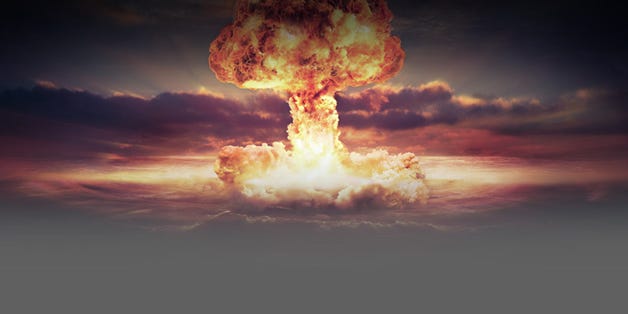
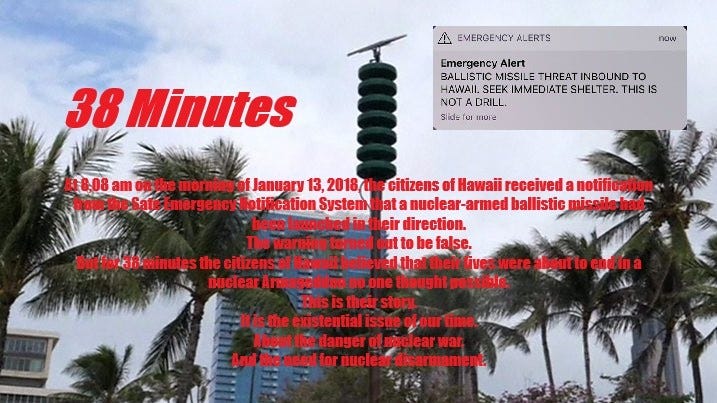
When I initially announced Project 38, it was envisioned as a stand-alone effort, a documentary film designed to serve as a wake-up call to an American public about the danger of nuclear war and the need for arms control.
The mission statement was simple and direct—to get the Trump administration to agree to the extension of the New START treaty.
The Poughkeepsie Peace Initiative was conceived with this goal in mind—a forum to mobilize informed citizen activists who would be able to amplify the message being presented by Project 38 and the documentary film 38 Minutes.
Then the playing field changed. I got my passport back, and was able to travel to Russia, where I engaged in a week-long program of interviews with prominent Russians helping promote better relations between Russia and the US and the foundational necessity of continued cooperation on arms control, without which the issue of improved relations would be moot.
Suddenly a one-dimensional project took on an additional dimension—Russia. Arms control is a two-way street, and nothing happens in a vacuum. Project 38 now was not just about changing US public opinion and US policy but making sure that the policy options being presented conformed with the Russian reality, thereby making these options more viable in the long run.
All this work was able to be accomplished through the generous donations provided by supporters who believed in the prospects of peace and a world free of the danger of imminent nuclear war that Project 38 aspired to.
But the reality is that the budget projected for the single-dimension project originally envisioned, and the budget realities of the new multi-dimensional project that has emerged, do not align.
The Poughkeepsie Peace Initiative was intended to produce a viable plan of action to promote the extension of the New START treaty, as well as enabling critical interviews to be conducted in support of the 38 Minute documentary. The interviews were done. But literally two days before the gathering of experts in Poughkeepsie, Russian President Vladimir Putin declared that an extension of New START was no longer on the table. In short, New START would expire of February 5, 2026.
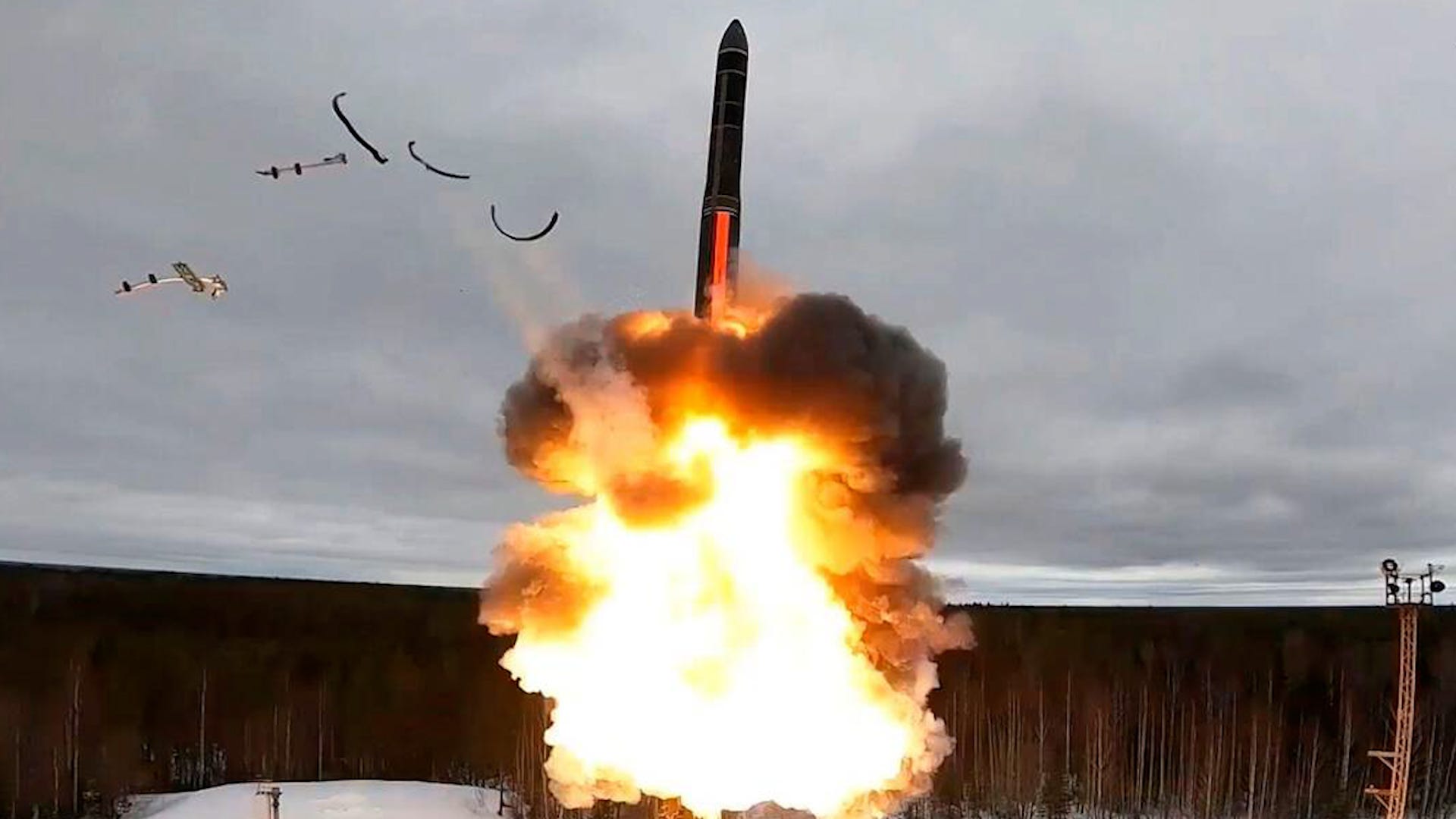
What Putin offered in its stead was a voluntary one-year moratorium on the quantitative caps on deployed strategic nuclear warheads mandated by New START. However, this moratorium was contingent on the US not undertaking any actions that were deemed destabilizing to the strategic balance.
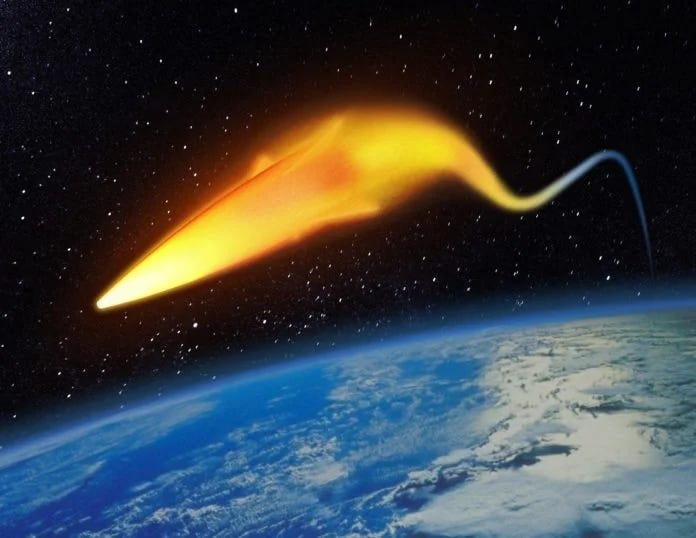
The Trump administration is currently envisioning acting in the coming year on two such initiatives—the ‘Golden Dome’ missile defense shield, and the scheduled deployment of the ‘Dark Eagle” intermediate-range hypersonic missile to Germany, scheduled for the summer of 2026.
Project 38 just became orders of magnitude more complex. No longer is mission success a relatively simple matter of seeking what should be a common sense-driven extension of the New START treaty.
Now the groundwork needed to be laid for a more fundamental approach to arms control, one that required the negotiation from scratch of a new arms control treaty, something the Trump administration has not shown a proclivity for doing.
And at the same time the Trump administration must be convinced that finalizing this new arms control treaty takes priority over both ‘Golden Dome’ and ‘Dark Eagle.’
Given this new reality, the Russian dimension looms larger than ever. The August visit opened the door to new and exciting possibilities, resulting in the scheduling of a follow-on visit in November. I have built a game plan for this November visit which is anchored by the issue of arms control—indeed, the foundation upon which this trip is constructed is the publication of my book, Highway to Hell, in the Russian language. I will be doing several book events while in Russia where the importance of arms control will be amplified. And I will be conducting a series of interviews with prominent Russian figures where US-Russian relations and arms control will feature.
However, when the November visit was originally conceived, all I was wanting to do was get a feel that the Russians were as interested in extending New START and preventing a new nuclear arms race as we were.
Now, with the reality that a simple extension is out and the need for a new treaty was in, a far more complex problem set emerged—how to capture the Russian reality when it comes to the multi-faceted problem set that now presented itself—the need to factor in the nuclear arsenals of the UK and France, how China’s nuclear arsenal factored in, where do intermediate-range nuclear forces factor in, and what to do about ballistic missile defense.
My mission is not to negotiate—that would be a violation of the Logan Act, and the Russians would not take such an effort seriously.
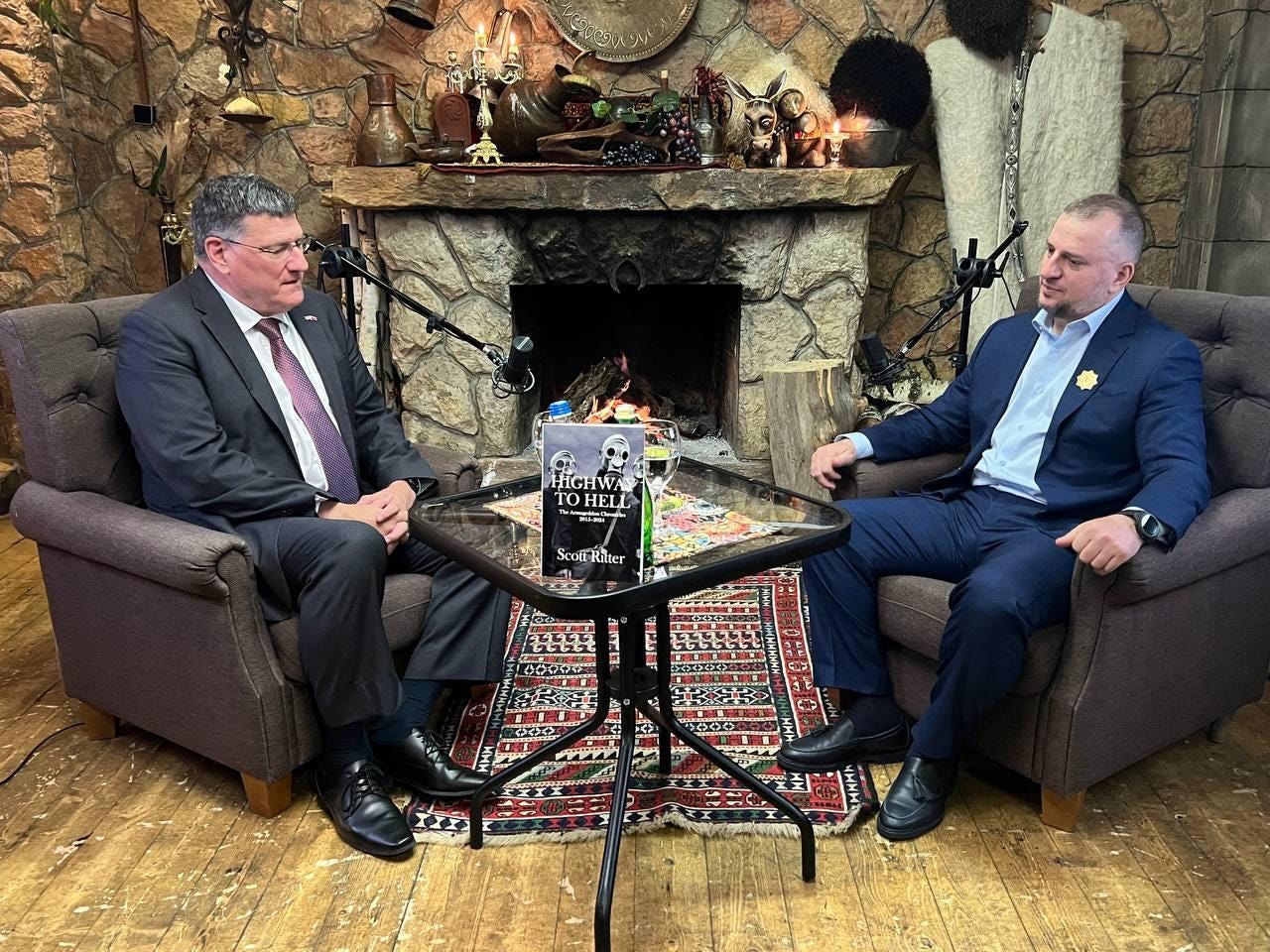
What I can do—and must do—is accurately capture the Russian reality so that the citizen engagement process envisioned during the Poughkeepsie Peace Initiative meetings can craft a politically viable program of action derived from facts, not fiction.
The Russian reality will be what separates the Poughkeepsie Peace Initiative effort from the “experts” currently advising President Trump, whose positions are driven more by Russophobia than reality.
I have added five days to my visit to Russia in November so that additional opportunities can be pursued. Some of these opportunities come in the form of interviews which cannot be guaranteed until after my arrival in Russia, if at all. The same holds true for briefings, tours and meetings related to the various issues which impact the issue of arms control as it currently exists.
I already have a robust schedule which includes speaking before prominent academic, business and political audiences. But there is the need for so much more to be done, and the real potential for these needs to be met through my work.
But now comes the kicker—money.
“Money makes the world go around,” they sang in the movie Cabaret.
And this is the unfortunate reality we are faced with today.
For the Poughkeepsie Peace Initiative to have a chance at success, it must not only be seen to be free of outside influence but be demonstrably so.
This means every aspect of my Russia trip must be self-financed, from the air fare to the hotel, meals, internal transport, hiring of camera crews, translators—everything.
And Russia isn’t cheap.
I depart for Russia on November 6.
And I’m several thousand dollars short of the budgetary requirements needed to fulfill all of the intended objectives.
I’ll be able to accomplish the original goals, but these goals no longer, by and of themselves, accomplish the mission.
To give the Poughkeepsie Peace Initiative a fighting chance, I need to deliver on the full potential of this trip.
This is where I need your help once again.
Citizen diplomacy is critically important.
But it means that it must be backed by the full moral, intellectual, and financial support of an engaged citizenry.
I cannot guarantee outcomes.
But I can guarantee that, if given the opportunity, I will do my utmost to achieve the outcomes necessary for mission accomplishment.
And mission accomplishment in this case means no nuclear war.
I thank you in advance for your generous support and ongoing commitment to the cause of peace.
Thank you, Scott, for taking on this exceeding difficult task, bearing, like Atlas, the weight of all future life on your back, largely on your own, a task that a REAL President would be doing on behalf of the citizens and all, humanity. But please provide the payment link!
Thank you Scott and for doing all you can for peace. Sometimes the former warriors like yourself are the best advocates for peace. You understand the horrors of warfare. Plus the futility of it.