

The Backpack Girls
The attack on the Shajareh Tayyebeh school in Iran was a clear cut war crime. Will Pete Hegseth ever be brough to justice for his role in murdering 168 innocent lives?

On the morning of February 28, 2026, Atena Ahmadzadeh, a precocious ten-year old girl, left for school. It was a Saturday, which in Iran is a workday, and classes were scheduled as usual. In March 2025, the Iranian government had mandated that school hours be changed to help ease the electricity crisis that existed. Under the new rules, school began at 6 am, and finished at 1 pm. This meant Atena and her classmates had to rise as early as 4.30 am in order to arrive at their school on time.
Atena was an accomplished gymnast who had competed in numerous local and regional competitions. There would be practice later in the day, the prospects of which put a bounce in her step as she left her home, slinging a backpack filled with her books, papers, and gymnast uniform across her tiny back.
Zeinab Mirkhayali, nine years of age, also made her way to school. In her backpack were materials she used to help her prepare for a prestigious recitation competition to be held in Tehran in two moths time. Zeinab had spent hours memorizing passages from the Quran. She was looking forward to continue her preparations for the competition later that day.
Fatemeh Yazdan-panah, seven years old, and Earsa Farahi Zadeh, twelve, also made their way to school, their backpacks firmly slung across their backs. Despite the differences in their age, Fatemeh and Earsa were inseparable friends from the same rural village on the outskirts of Minab who behaved more like siblings, even to the point of dressing alike.
Greeting these four young girls, and the more than 150 other students making their way to class, was Fatemeh Taherifard, the principle of the “Shajareh Tayyebeh” (The Good Tree) school in the city of Minab, located in southern Iran. Sunrise was at 6.30 am, and already the sun’s glow could be discerned on the horizon, signaling the start of a new day.
Fatemeh greeted each of the “backpack girls” with an encouraging smile as she ushered toward the school building. These “backpack girls” who walked through the school gates were her responsibility; their hopes, dreams and aspirations were being nurtured and grown under her watch. Some of the “backpack girls” aspired to be like the women they watched on television, presenting the news. Others wanted to be doctors so they could care for their parents in their old age. Others wanted to be mothers and raise children of their own. Fatemeh knew these dreams, and it was her job to help these girls pick a path that would enable them to make these dreams come true.
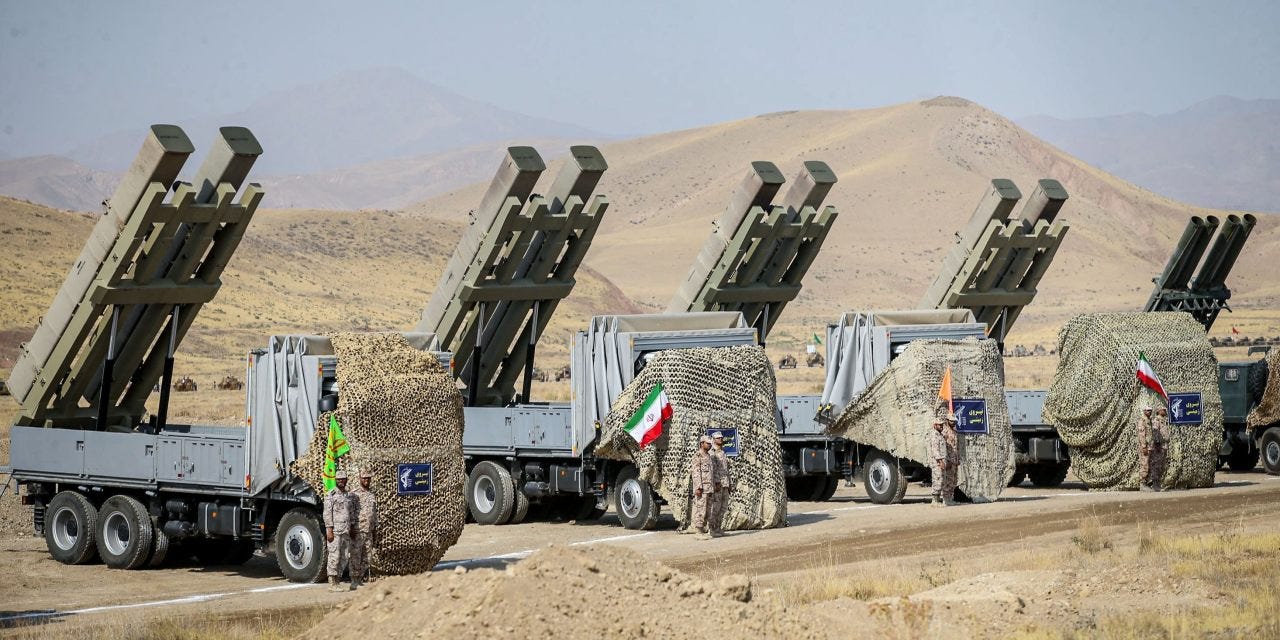
The “Shajareh Tayyebeh” school had opened in 2016, making use of structures formally associated with the “Sayyid al-Shuhada” (“Master of the Martyr’s”, an honorific title given to Imam Hussein following his martyrdom during the Battle of Karbala) military complex, which up until 2013 had been home to the headquarters of the “Asef Missile Brigade”, an unit within the structure of the Iranian Revolutionary Guard Command (IRGC) naval forces. But the facility had been closed in 2011, and the Asif Missile Brigade headquarters relocated. The IRGC, which operates a broad network of schools that serve the families of its members, decided in 2016 to convert part of the abandoned facility into a school. Construction was done to physically separate the school from the rest of the compound. Children’s playgrounds were constructed around the main school building, and the walls surrounding the school were painted with bright murals visible from afar.
The Asef Missile Brigade is headquartered in Minab, a town along Iran’s southern coast near the Sea of Oman. Overlooking the strategic Strait of Hormuz, this location represents the only passage from the Persian Gulf to the open ocean. A significant portion of the world’s energy supply, including a third of the world’s liquefied natural gas and nearly 25% of global oil consumption, passes through this waterway. The mission of the Asef Missile Brigade is to be prepared to project military power into the Strait of Hormoz, enabling Iran to restrict maritime shipping passing through, or even shutting it down outright.
The Asef Missile Brigade comprises four battalions, each with a distinct mission:
The 1st Battalion, armed with short-range anti-ship cruise missiles like the indigenously produced Zafar, is able to strike targets up to 25 kilometers distant sea-skimming radar guided technology.
The 2nd Battalion, armed with medium-range missiles such as the Hormuz-2 and Ghadr Fars, and possibly including modern Chinese anti-shipping missiles like the C-801/802, is able to strike targets up to 300 kilometers distant.
The 3rd Battalion provides long-range missile support coverage for offensive and forward defensive operations using the long-range Abu Mahdi and Talaeiyah missiles, each which has a operational range of some 1,000 kilometers.
The 4th Battalion is responsible for the defense of the Iranian coastline and sensitive zones within the Strait of Hormuz as well as projecting power using motor speed boats and armed dhows.
In short, the Asef Missile Brigade is the single most important Iranian military unit when it comes to the security of the Strait of Hormuz. If Iran wants to close the Strait, the Asef Missile Brigade will be the unit responsible for accomplishing that mission. And if other nations want to keep the Strait open during a conflict with Iran, defeating the Asef Missile Brigade will be their number one priority.
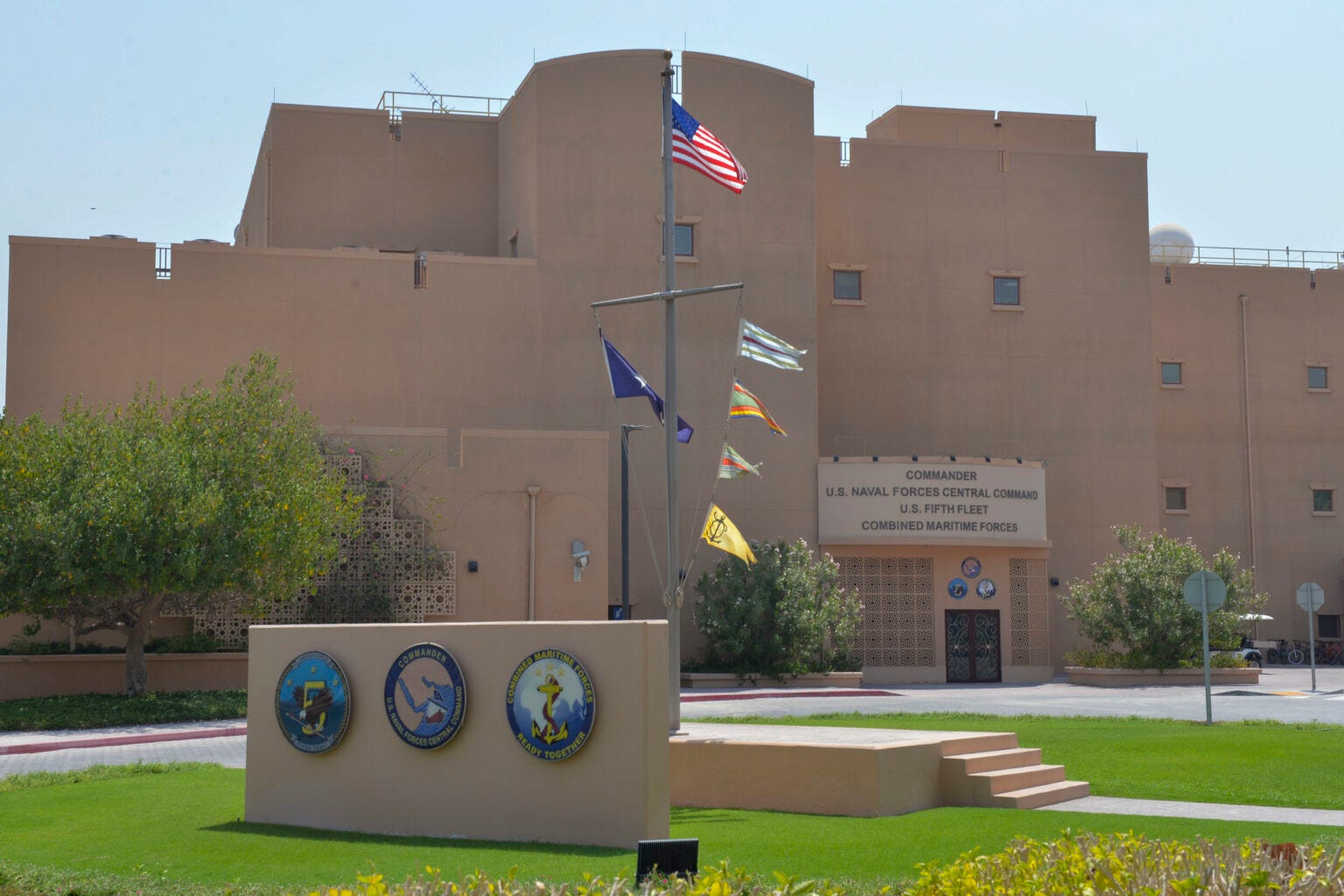
The United States maintains a military presence in the Persian Gulf, which operates under the auspices of the US Naval Forces Central Command/US 5th Fleet, major combatant command headquartered in Manama, Bahrain. The mission of the 5th fleet is to support the safe navigation and free flow of maritime commerce through vital regional chokepoints, particularly around the Strait of Hormuz. To accomplish this mission, the 5th Fleet is organized into several mission-specific task forces, each with their own unique force structure and operational parameters. These task forces include Task Force 51/5 (Amphibious/Marine), Task Force 52 (Mine Countermeasures), Task Force 53 (Logistics), Task Force 55 (Surface Warfare), Task Force 56 (Expeditionary), Task Force 57 (Patrol/Reconnaissance) and Task Force 59 (Unmanned/Artificial Intelligence).
In the event of a military conflict with Iran, the 5th Fleet’s mission would be to defeat the Asef Missile Brigade and secure the Strait of Hormoz for international shipping. The key to success in any such effort is intelligence—the 5th Fleet would need to know the precise location of every unit, subunit, facility and operational base so that these could be attacked and destroyed. To do this, the 5th Fleet has employed a massive intelligence collection effort targeting the Asef Missile Brigade, using human intelligence collectors to debrief fishermen and businessmen who have travelled to Minab, intelligence collection drones and aircraft designed to monitor Iranian communications and track Iranian radars and other signal-emitting devices, and a wide-variety of aircraft and satellites to photograph and map out the locations of all Iranian military units in the vicinity of the Strait of Hormuz.
This intelligence is assessed by the 5th Fleets own cadre of intelligence analysts, as well as fed back to the United States and Europe, where it is evaluated by other components of the US intelligence community. It is the job of these analysts and the intelligence community as a whole to know everything possible about the units, personnel and equipment comprising the Asef Missile Brigade, and to organize this data in a manner which is both accessible and useful for the US military as a whole.
For instance, information collected by the US 5th Fleet enabled the US National Geospatial Intelligence Agency to produce detailed maps of the Strait of Hormuz and Minab which clearly indicate that there was a school located where the “Sayyid al-Shuhada” had been located.
This information was also turned over to organizations responsible for developing targets in and around the Strait of Hormuz which would be bombed by US forces if a war were ever to break out. Military targeting is very complex, requiring an intimate knowledge of the target being struck in terms of construction, function and operation. Based upon this information, decisions can be made as to what kind of munitions are needed to achieve the desired effect on the target (destruction or disruption), and where these munitions should be aimed for maximum effect.
The issue of targeting lies at the very heart of the body of international humanitarian law that governs the legality of military operations. The foundation of law in this regard comes from the 1977 Additional Protocol I to the 1949 Geneva Conventions, and despite the fact that the US is not a signatory to these documents, the rules set forth in these protocols as regards targeting are generally considered to reflect customary law binding on all states, including the United States. Indeed, these protocols are cited in the Department of Defenses 2023 version of the Law of War Manual.
Three components of the law of targeting emerge from these protocols: distinction, proportionality, and feasible precautions.
Of the three, distinction is perhaps the most important, providing as it does that parties to a conflict must always “distinguish between the civilian population and combatants and between civilian objects and military objectives.” A key element of this is the fact that distinction applies to any notion of what constitutes an indiscriminate attack, including any attack by bombardment which treats as a single military objective a number of clearly separated and distinct military objectives. In short, area targeting is not permitted under the law of war if civilians and civilian objects are collocated with multiple military objectives in the area.
In the case of the “Shajareh Tayyebeh” school and its use of structures formally associated with the “Sayyid al-Shuhada” military installation, the issue of distinction is incontrovertible—the US intelligence community knew the facility was a school (it was marked so on maps), and as such the school should have been placed on a “do not strike” list available to anyone preparing targets in support of potential military operations in and around the Strait of Hormuz.
The US 5th Fleet was tasked with being prepared to initiate offensive military operations against Iran, including those missions necessary to deny Iran the ability to close the Strait of Hormuz. To help facilitate this mission, the 5th Fleet continuously worked on developing a list of targets, including those involving the Asef Missile Brigade, which were then transmitted to US Central Command for inclusion in a master target list that would serve as the basis for any military action.
The “Shajareh Tayyebeh” school was not on this list, having been clearly identified as a school and as such prohibited from being attacked.
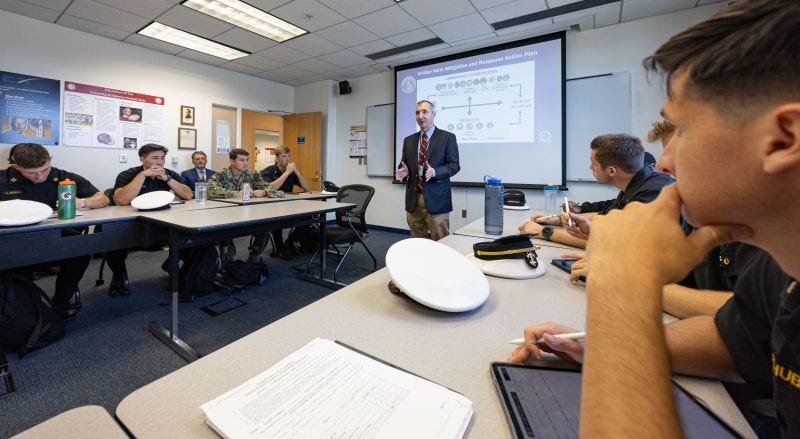
Both the 5th Fleet and Central Command were assisted in the critical distinction aspects of targeting by a new organization, the Civilian Harm Mitigation and Response (CHMR) Office, which was created in 2023 in response a new Department of Defense Instruction, 3000.17. The Civilian Harm Mitigation and Response Office was mandated, among other things, to assign teams to Department of Defense (DoD) components that engage in military operations to see that additional protective measures above those required under the DoD Law of War Program, which aims to ensure compliance with the law of war during armed conflicts and military operations, and the DoD Law of War Manual. CHMR involved, among other things, ensuring that any DoD component engaging in armed conflict or military operations issue standards for the identification of targets above what the law of war requires. CHMR teams were to become intimately involved in all aspects of mission planning, including target planning and engagement, where they would implement procedures designed to impose positive identification criteria that addresses sources of information used to identify targets and set appropriate levels of certainty regarding establishing the precise location and functionality of the target.
A 10-person CHRM team was assigned to Central Command, and a smaller team forward deployed to 5th Fleet.
The need for CHRM was manifested by the reality that, in the course of two decades of low-intensity conflict in support of the so-called Global War of Terror, inclusive of operations in Iraq and Afghanistan, the US military had repeatedly engaged in operations that misidentified locations and activities and resulted in attacks of exclusively civilian locations. The 2015 attack on a hospital in Afghanistan stands out in this regard, as does the August 2021 drone strike in Kabul that killed an aid worker and his family. CHRM was seen as a necessary measure to get the US military back on track when it came to the collective obligation to adhere to the law of war when it came to targeting.
Although the need for CHRM was first conceived during the first Trump administration, the DoD Instruction wasn’t issued until 2023, during the administration of President Joe Biden. Immediately after being nominated for the position of Secretary of Defense by Donald Trump, following his election to a second term in office in November 2024, Pete Hegseth began articulating a desire to return the US military to a “warfighting” mindset and “warrior” ethos free of what he called “restrictive rules of engagement.” Shortly after President Trump was sworn into office, Hegseth abruptly fired the senior uniformed attorneys, known as Judge Advocate Generals, or JAGs), whom he derisively referred to as “jagoffs.” Hegseth blamed them for advocating in favor of rules of engagement and the new CHRM standards.
In early March, 2025, Defense Secretary Pete Hegseth ordered the closure of the CHRM office in the Pentagon He also instructed the Pentagon to cut all CHRM positions at combatant commands, including Central Command and 5th Fleet, and to coordinate with Congress to rescind the policy instruction mandating CHRM.

Secretary Hegseth gave voice to this new policy direction he had embarked on when addressing an assembly of senior US military officers at Quantico, Virginia, on September 25, 2025. “We have to be prepared for war, not for defense,” Hegesth said, “We’re training warriors, not defenders. We fight wars to win, not to defend. Defense is something you do all the time. It’s inherently reactionary and can lead to overuse, overreach and mission creep. War is something you do sparingly on our own terms and with clear aims. We fight to win. We unleash overwhelming and punishing violence on the enemy. We also don’t fight with stupid rules of engagement. We untie the hands of our warfighters to intimidate, demoralize, hunt and kill the enemies of our country. No more politically correct and overbearing rules of engagement, just common sense, maximum lethality and authority for warfighters.
Hegseth wrapped up his presentation by declaring “today is another liberation day, the liberation of America’s warriors, in name, in deed and in authorities. You kill people and break things for a living. You are not politically correct and don’t necessarily belong always in polite society.”
Kill and break things.
The exact opposite of the CHRM ethos that was imposed because of the US militaries over exuberant track record of killing and breaking things which more often than not translated in killing civilians and destroying civilian facilities.
Sometime in mid-January 2026, President Donald Trump ordered the US military to prepare for war with Iran. As part of Pete Hegseth’s new “maximum lethality” posture, US Central Command was ordered to dramatically expand its list of targets to be struck by US forces in case of war. Central Command turned to Anthropic, an American artificial intelligence corporation, to use its Claude AI platform to assist with intelligence assessments, target identification and simulating battle scenarios in support of combat operations against Iran.
In short, Hegseth had terminated a human program, CHMR, designed to make sure that the law of war was strictly adhered to, and replaced it with an artificial intelligence program operating in an environment where rules of engagement were to be ignored and maximum lethality encouraged.
Among the targets that Claude recommended to be attacked was the “Shajareh Tayyebeh” school in Minab, most likely because of its past affiliation with the “Sayyid al-Shuhada” IRGC compound and the Asef Missile Brigade.
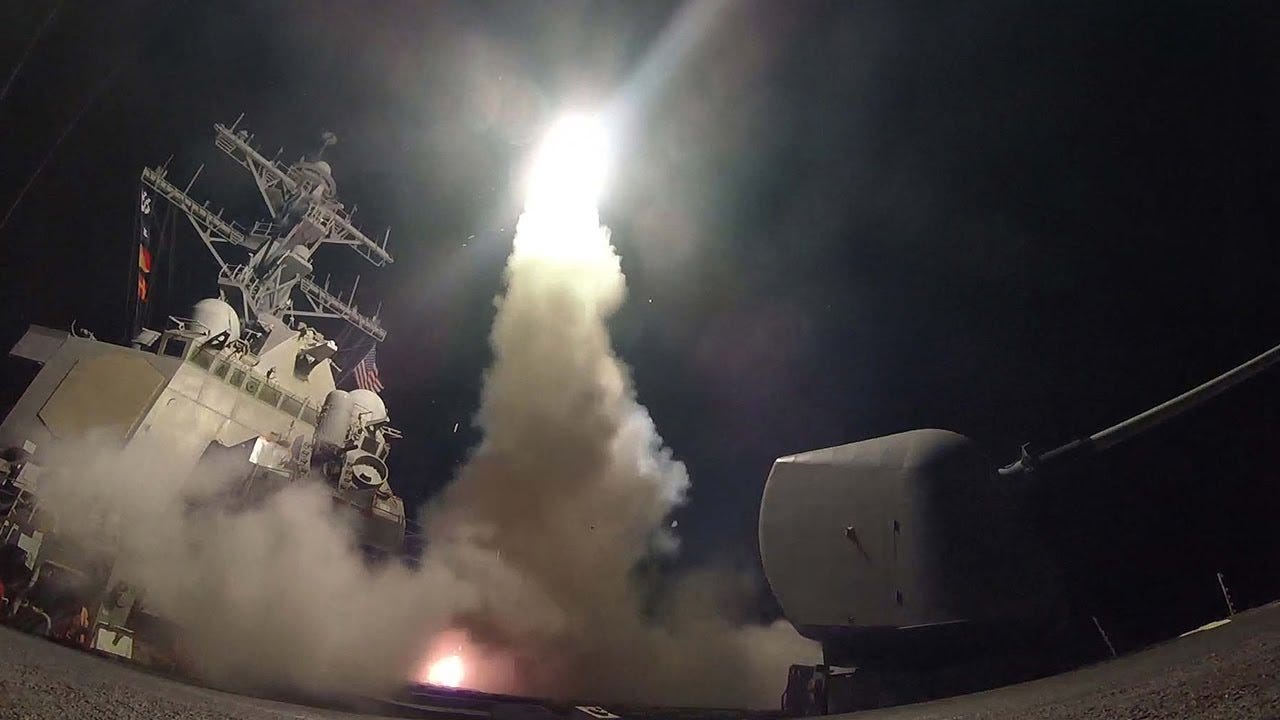
On February 28, 2026, dozens of BGM-109 Tomahawk Land Attack Missiles (TLAMs) were launched from US Navy ships and submarines against targets in Iran. The “Sayyid al-Shuhada” IRGC compound, identified by Clause and not vetted by CGMR, was allocated four TLAMS. There were three impact points designated for striking, each a structure of similar dimensions suggesting that the target selection criteria used by Claude included buildings or structures capable of containing Iranian missiles affiliated with the Asef Missile Brigade.
A fourth TLAM was given the mission of following in trace of the initial three TLAMs and use its onboard camera to take photographs of the “Sayyid al-Shuhada” IRGC compound and transmit them back to a control center onboard one of the Arleigh Burke-class ships that launched the TLAMs. There a team of missile operators would examine the imagery to make sure that the destruction criteria had been met, and decide whether or not a target needed to be re-struck.
While the missile launch operators loaded in the targeting data for each TLAM, Fatemeh Taherifard was busy carrying out the tasks associated with being the principal of a school. First the morning assembly and role call, to make a record of who was in attendance and who was not. Then classes began. The school offered a full curriculum of mandatory studies—Islamic studies, Persian language studies—reading, writing and comprehension — social studies, mathematics and science. After each class, the students would be let outdoors for a brief 15 minute recess, before being called back in to resume their classes. A meal would be served after the morning sessions, usually around 9.30-10 am. And after the formal school day ended, there were the extracurricular activities.
It was during the lunch period that the first TLAMs began striking targets in the Minab region. The local government made the decision to close the schools, and Fatemeh and her teachers began calling the phones of parents and guardians, telling them to come pick up their children.
The war had begun.
The students were assembled in their respective classrooms, and headcounts taken and double checked. Around 10.30 am, Fatemeh and the students heard the sound of a TLAM striking a warehouse in the adjacent “Sayyid al-Shuhada” IRGC compound.
Then another.
Students and teachers alike could feel the vibration of the explosions, and the sound was deafening.
Fatemeh and her staff walked among the students, doing their best to calm them down.
Then the third TLAM struck.
The TLAM Block IV uses what is known as the Joint Multiple Effects Warhead System, or JMEWS. It is designed to penetrate bunkers, and then a secondary warhead explodes, killing through a combination of blast effect and shrapnel.
The initial penetrating charge did its job, punching a hole in the roof of the school.
and then the high explosive secondary charge went off, shredding the bodies of the young girls and their teachers, and collapsing the structure on top of the survivors.
Fatemeh was knocked to the ground, stunned. The air was filled with acrid smoke and dust.
At first there was silence.
And then the cries of pain began to fill the air, followed by the screams of the survivors, calling out in fear for help.
Fatemeh got to her feet and began looking for her “backpack girls”. There was a contingency for emergencies that called for students and faculty to assemble in the prayer room, deemed to be the most secure room in the building. Fatemeh started gathering survivors and leading them to the prayer room, stepping over the bodies of her students who had not survived the initial blast.
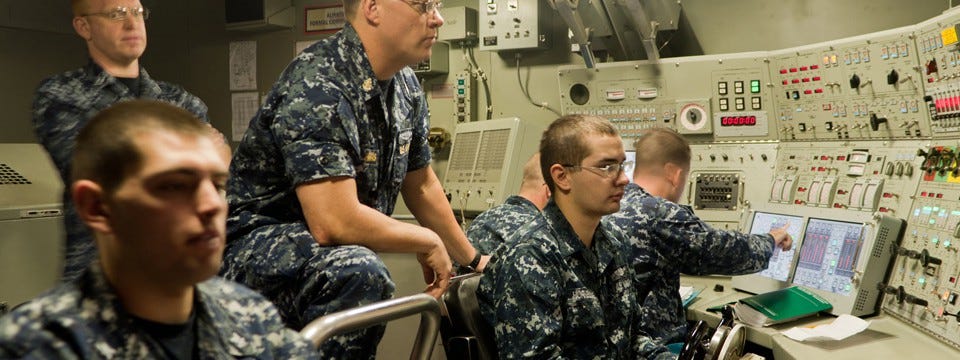
On board the Arleigh Burke class ship, the TLAM strike controller began to download the images from the fourth TLAM, before sending it off to a loiter position away from the target.
There was no special instructions for this target, no CHRM-generated “do not strike” list—nothing. Simply a battle damage assessment guide that set the most basic of mission success criteria—evidence of a missile strike on the structures in question. The TLAM strike controller examined the imagery sent by the fourth TLAM—low pixel, low resolution imagery sufficient for the task of ascertaining whether or not a building had been struck or not. All three targets showed evidence of having been hit by their assigned TLAM. But the TLAM strike controller noticed something in the imagery of the the third structure—people. Lots of people.
As far as he knew, this was the headquarters facility of the Aref Missile Brigade, and the people he saw were the command staff of this most dangerous of enemy units. The TLAM operator initiated contact with the fourth TLAM, which was still in loiter mode, instructing it to attack the third building. Since the roof had already been breached, the TLAM strike controller reprogramed the fusing mechanism of the WDU-36/B blast fragmentation warhead, putting all of the explosive force into the fragmentation effect.
The fourth TLAM, freshly reprogrammed, broke off its loiter pattern, and began its final attack run on the target. As it approached Fatemeh and the surviving students, the missile pitched upwards, gaining altitude. As it flew over the target, the missile pitched down, and began a near vertical dive into the target.
The WDU-35/B consists of a titanium case assembly weighing around 350 pounds, packed with about 450 pounds of high explosive. It can be fused in a number of ways, including a delay which would allow for greater penetration, or contact, which would achieve the most surface damage. Given the fact that the imagery showed large numbers of people around the target, the fuse was set for contact, meaning that the maximum number of fragments possible from the titanium case would be available to kill as many people as possible.
Or, as Pete Hegseth noted, “maximum lethality.”
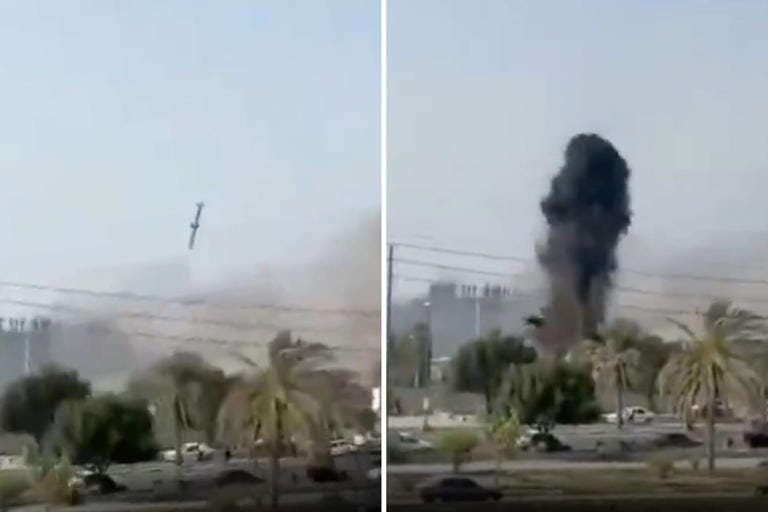
Fatemeh had gathered as many of the surviving students as she could find into the prayer hall. She and her fellow staff members were doing their best to calm the girls down. But the screams of their wounded classmates still filled the air, including many trapped underneath the concrete of the collapsed, literally having the life squeezed from them as they cried out to their friends, classmates, and teachers for help.
It is one of God’s mercies that Fatemeh and her “backpack girls” never heard the second missile before it struck. The blast effect of the warhead, set as it was to explode on contact, killed those who had been ushered into the prayer hall instantly. Adding insult to injury, the unused JP-10 jet fuel used to power the TLAM’s jet engine vaporized and was consumed in a thermobaric-like fireball, turning tiny bodies into ashes in the literal blink of an eye.
Outside the school parents and rescuers had begun to converge on the site when the second missile struck, killing some of the parents who had made their way into the collapsed building in an effort to find their daughters. Once the shock wore off from the second blast, the surviving parents surged forward, their voices screaming out in fear, torment and rage, as they looked for their little girls. Security forces and first responders tried to hold them back. Eventually what passed for order was restored, and teams of rescuers began the impossible task of pulling survivors from the rubble.
As the hours passed by one by one, the rescuers realized they were in the recovery phase of the response to the “Shajareh Tayyebeh” school attack.
There were no more survivors to be found.
Now they had the horrible but necessary task of collecting what remained of the “backpack girls.” severed arms and legs, hands and fingers, heads without torsos, and torsos without heads—this is what was left of the girls who, but a few moments ago, were intact spiritually, emotionally, and physically.
Now they were dead.
Some of the “backpack girls”, however, had been so grossly injured that their remains were unidentifiable and, in the case of this whose bodies had been turned into ash, unrecoverable.
Parents and relatives waited on the outskirts of the school as the remains were recovered. As the bodies and body parts were removed from the destroyed school building, the parents would examine them to see if they belonged to their “backpack girl.”
Some bodies were readily identified, even though to do so was soul crushing—a girl, her body fully intact from the neck down, but revealing a skull crushed by falling debris. Others could only be identified by the color of their clothes, or a bracelet on the wrist.
The backpacks survived better than flesh, bone and blood.
Ownership of the backpacks could be determined by the little trinkets and toys the girls would attach to the zippers, clasps and straps. Inside each backpack was evidence of a young life ended too soon. The things they carried defined these “backpack girls”—while their school books may have been the same, the nots and drawings they made in the margins of each page, or in their own notebooks, served as a reminder that these now inanimate objects had once been directly reflective of a life that had yet to be lived to its fullest.
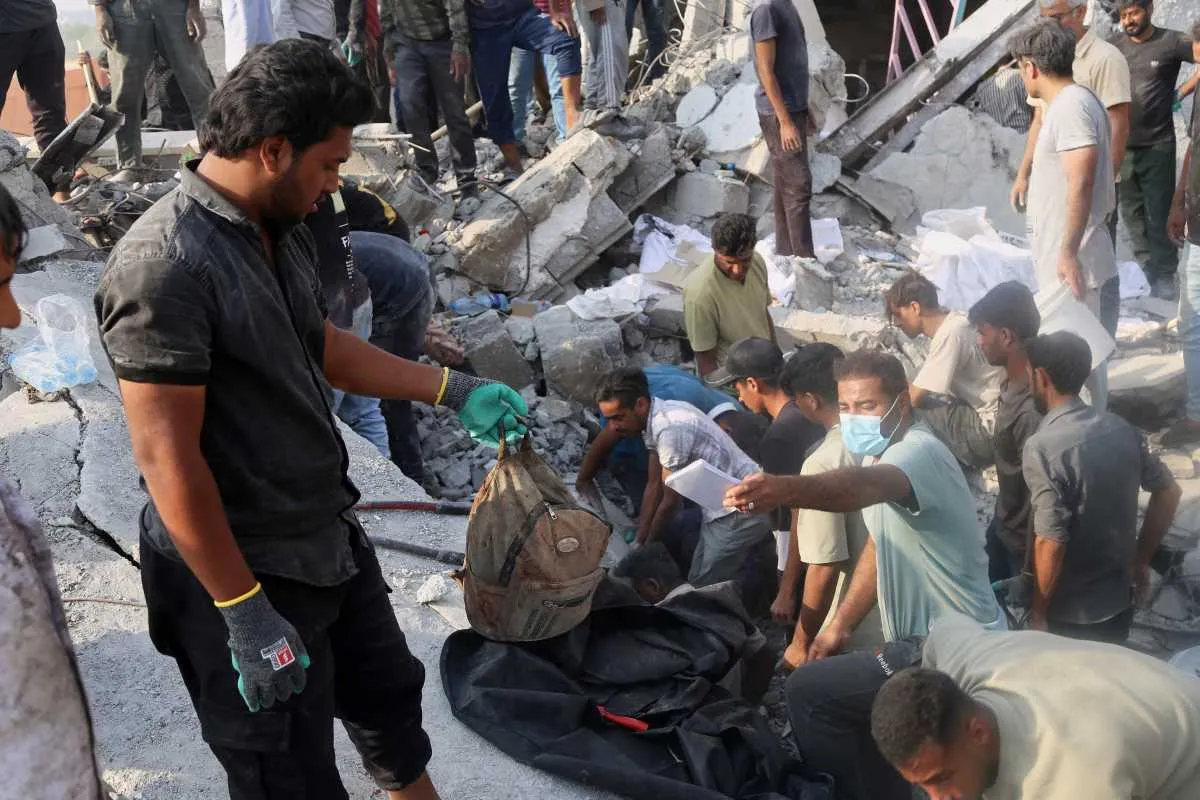
One by one, the backpacks were collected by the men who sifted through the ruins, their souls scared by what they were bearing witness to. Lovingly passed, hand to hand, until they found a resting place to the other backpacks whose owners would never again sling them across their backs, giggling with joy over the prospect of taking the dreams that these backpacks contained and turning them into the very essence of that which makes life worth living.
A total of 168 persons were killed in the US TLAM attack on the “Shajareh Tayyebeh” school.
Most of the dead were children.
Sixty nine of the bodies were so badly mutilated or burned that positive identification could not yet be made.
94 others were wounded in the attack.
Let there be no doubt that the attack on the “Shajareh Tayyebeh” school was a war crime of the most heinous sort.
The law of war is quite clear—school’s are exclusively civilian targets that cannot be targeted.
In this case, the school had been physically separated from the adjacent abandoned military facility.
There were no Iranian missiles hidden on school grounds.
Just the “backpack girls” and their teachers.
This attack was not an accident.
It was the byproduct of deliberate measures undertaken to eliminate mechanisms designed to prevent this very sort of incident from happening, while encouraging a new military ethos which downplayed rules and strongly emphasized lethality.
There must me justice.
Justice for Atena Ahmadzadeh.
Justice for Zeinab Mirkhayali.
Justice for Fatemeh Yazdan-panah and Earsa Farahi Zadeh.
Justice for Fatemeh Taherifard,
And justice for the 163 other innocent souls whose lives were taken because one man decided that he would do away with the rules, and dispense with the law of war (“rules of engagement’), all the while literally baying for blood.
This man has a name—Pete Hegseth.
And if America is to ever have a shot at restoring its honor, Pete Hegseth must be punished for his crimes.
America must atone for its actions—Pete Hegseth’s actions.
Justice must be served.
And Pete Hegseth must be brought before a jury of his peers to stand trial for the murder of 168 innocent Iranians.
America needs such a trial to cleanse itself of the stain on our collective honor brought about be these murders.
The world needs it if for no other reason that to be shown that the United States is a nation of laws, and that no man is above the law.
Iran needs it, to allow the difficult healing process to begin so that one day Americans and Iranians can live and work side by side without fear of recrimination.
But most of all the memory of the “backpack girls” demands it.
Their souls were ripped from their bodies at such a young age, their families left alone to deal with the giant hole that had been torn in their collective existence.
They will never know peace until justice has been done to the man singularly responsible for the deaths of the “backpack girls”.
Pete Hegseth.
A mass murderer.
And the living manifestation of everything that has gone wrong with the United States over the course of the past 30 years.
You are a superb journalist, Major. Thank you for writing about this, heartbreaking though it is. Their precious little lives mattered! Светлая Память!
For those deeply stupid and totally propagandized Americans who have lived under their sick, murderous Government for decades while it killed millions of innocent people all around the world, this mindless slaughter of girl children will give the idiots something more to repress and ignore. Hegseth, of course, is a vile, disgusting maniac, and so is his loudmouth, dimwit boss, but the responsibility for them is with our torpid, braindead morally cripple population, who put them in office. Americans are the Nazis of this era. Hard for some of us to swallow but true.