

Terror and Mental War
The Ukrainian attack on the Starobelsk College in Lugansk is part of a larger western psychological warfare operation designed to undermine Russian confidence in its leadership.
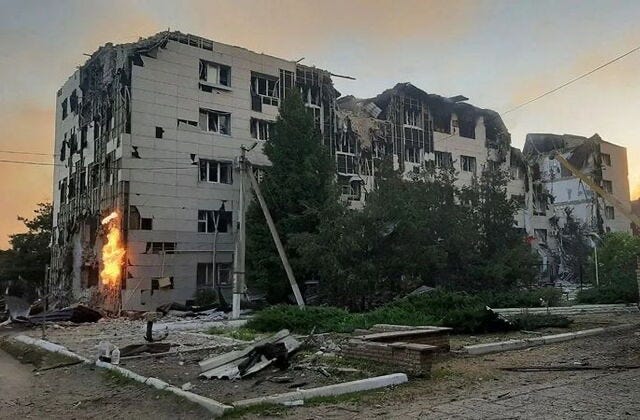
Death came in a dream.
In the early morning hours of Friday, May 22, 86 students of the Starobelsk College, part of the Luhansk Pedagogical University, were snuggled up in their beds, dreaming the dreams of youth, full of excitement and anticipation of all that life held for them. The students were preparing to become the future educators of the next generation of Russians, those who would be tasked with taking Lugansk and rest of the Donbas region out of the doldrums of war and into a bright shining future filled with hope and promise.
Ukrainian forces used large aircraft-type attack UAVs—16 total, in three distinct waves. At least four of these aircraft impacted the buildings of Starobelsk College, including the dormitory where the 86 students were sleeping.
As of this writing, at least 4 students have been killed and 35 others injured. But with 18 students still trapped under the rubble of their dormitory, these numbers will surely go up.
Russian President Vladimir Putin has rightly condemned the attack on the Starobelsk College, and has instructed the Russian Ministry of Defense to come up with options on how best to respond.
Meanwhile, the atmosphere inside Russia darkens.
The Russian Foreign Ministry rightly points out the absolute silence on the part of the collective West when it comes to condemning the attack on 86 sleeping students. And the western media meanwhile parrots the Ukrainian narrative which justifies the attack as part and parcel of the need for Ukraine to collectively punish Russia and the Russian people for their crime of attacking Ukraine. “We are bringing the war back home—to Russia—and that’s only fair,” Ukrainian President Volodymyr Zelensky said after the attack, which was part of a larger wave of drones dispatched by Ukraine that same day, many of which targeted strategic oil refining facilities located hundreds of kilometers inside Russia proper.
This is not a new scenario, but rather one that has been playing for several years now, a painful pattern of repeated atrocities designed to be insultingly provocative, yet intended to stop short of crossing a line from which there can be no turning back—a line that would have Russia respond decisively and, perhaps, fatally for the West and the entire world.
The mastermind behind this dangerous game of escalation management does not reside in Kiev, but rather in the heart of Perfidious Albion—85 Albert Embankment, in Vauxhall Cross, London, the gleaming headquarters of the Secret Intelligence Service, perhaps better known as MI-6.
It is well established that the political phenomenon that is Volodymyr Zelensky is little more than a project of British intelligence, and is an extension of a Russophobic mindset that has infected the Anglo-Saxon brain ever since the Ochakiv Crisis of 1791, when William Pitt the Younger sought to check Russia’s influence in the Black Sea.
In the mind of his British intelligence handlers, Zelensky exists for one reason and one reason only—to create the conditions necessary to collapse Russia from within.
That’s it.
The British do not care about the Ukrainian people, or some entity called Ukraine.
They only care about defeating Russia.
This fundamental truth must be acknowledged before any assessment can be made about the attack on the Starobelsk College dormitory, or any Russian response.
Because by responding to the attack, Russia ostensibly should be seeking a solution to the problem manifested by Ukraine’s continued drone attacks.
But the drones are simply a symptom of the larger disease that is British Russophobia.
The drones, like Ukraine, are but a tool wielded by the entity seeking to create something that, left to its own devises, would not exist.
Perfidious Albion seeks a submissive Russia, a defeated nation that can be readily manipulated by those in London seeking to maintain and sustain Great Britain’s post-colonial global aspirations.
The mechanism to achieve this nefarious goal transcends traditional forms of warfare, including what has been called hybrid warfare.
It is more than a classic information operation, or black propoganda.
What the British are doing with Ukraine when it comes to Russia is known as “mental warfare.”
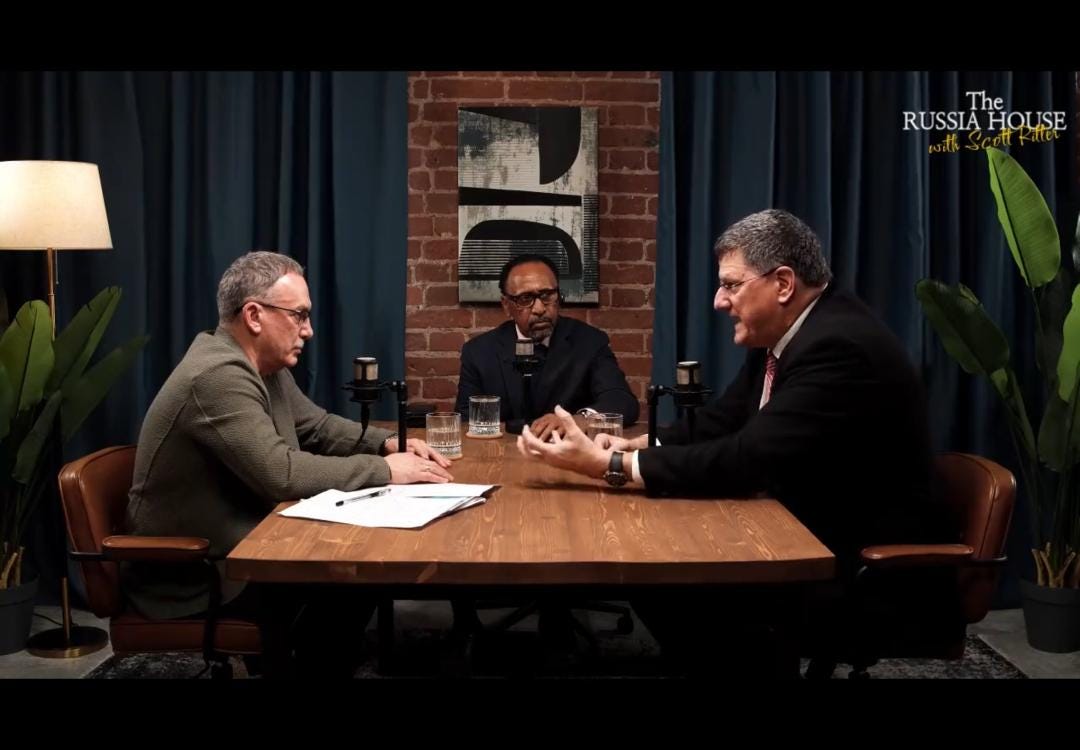
What is mental warfare? I’ll let the co-author of the concept, Lieutenant General Andrei I’lnitsky, explain:
Mental warfare is a concept in contemporary Russian military and strategic thought that denotes a distinct, standalone type of modern warfare waged primarily in the mental, cognitive, axiological, and ontological domains. It is defined as a systematic, triune (tactical-operational-strategic) strategy aimed at the capture, occupation, and radical transformation of an adversary’s mental space — including collective consciousness, national identity, historical memory, value systems, and civilizational foundations — in order to paralyze political will, erode sovereignty, and deprive the target society of its capacity to function as an independent civilizational and geopolitical actor.
Mental warfare is the highest existential-civilizational form of conflict. It integrates informational, cognitive, and spiritual-worldview spheres into a holistic technological architecture. While advanced technologies, including artificial intelligence, serve as instruments — particularly for penetrating archetypal layers of the collective unconscious — the primary operational environment is the mental sphere of a civilization: its axiological (value-based) and ontological (being-related) foundations.
Mental warfare emphasizes a triune ontology comprising three mutually reinforcing levels:
• Tactical level: Immediate information-psychological operations (including disinformation, deepfakes, fabricated orders, and classical PsyOps) designed to create localized chaos, demoralization, and disorientation.
• Operational level: Broader efforts to undermine trust in institutions, attack national identity, exacerbate internal contradictions, and fragment elites and society into isolated informational echo chambers.
• Strategic (civilizational) level: Long-term transformation of fundamental civilizational structures through the rewriting or “cancellation” of history, revision of culture and traditions, and imposition of alien value matrices.
A central analytical feature of mental warfare is the cumulative and often irreversible effect arising from the synergy of these levels. Tactical actions accumulate into operational shifts in mass consciousness, which in turn enable profound strategic, civilizational changes. This nonlinear dynamic allows mental warfare to achieve existential outcomes — moral and political capitulation — with relatively low material costs compared to kinetic warfare, potentially rendering a state incapable of sovereign civilizational reproduction even while formal state structures remain intact.
Mental warfare is characterized by the total penetration of the logic of war into the ontological and civilizational space of the adversary. It is framed as a struggle not primarily for territory or resources, but for control over the direction of global transformation and the establishment of a new world order.
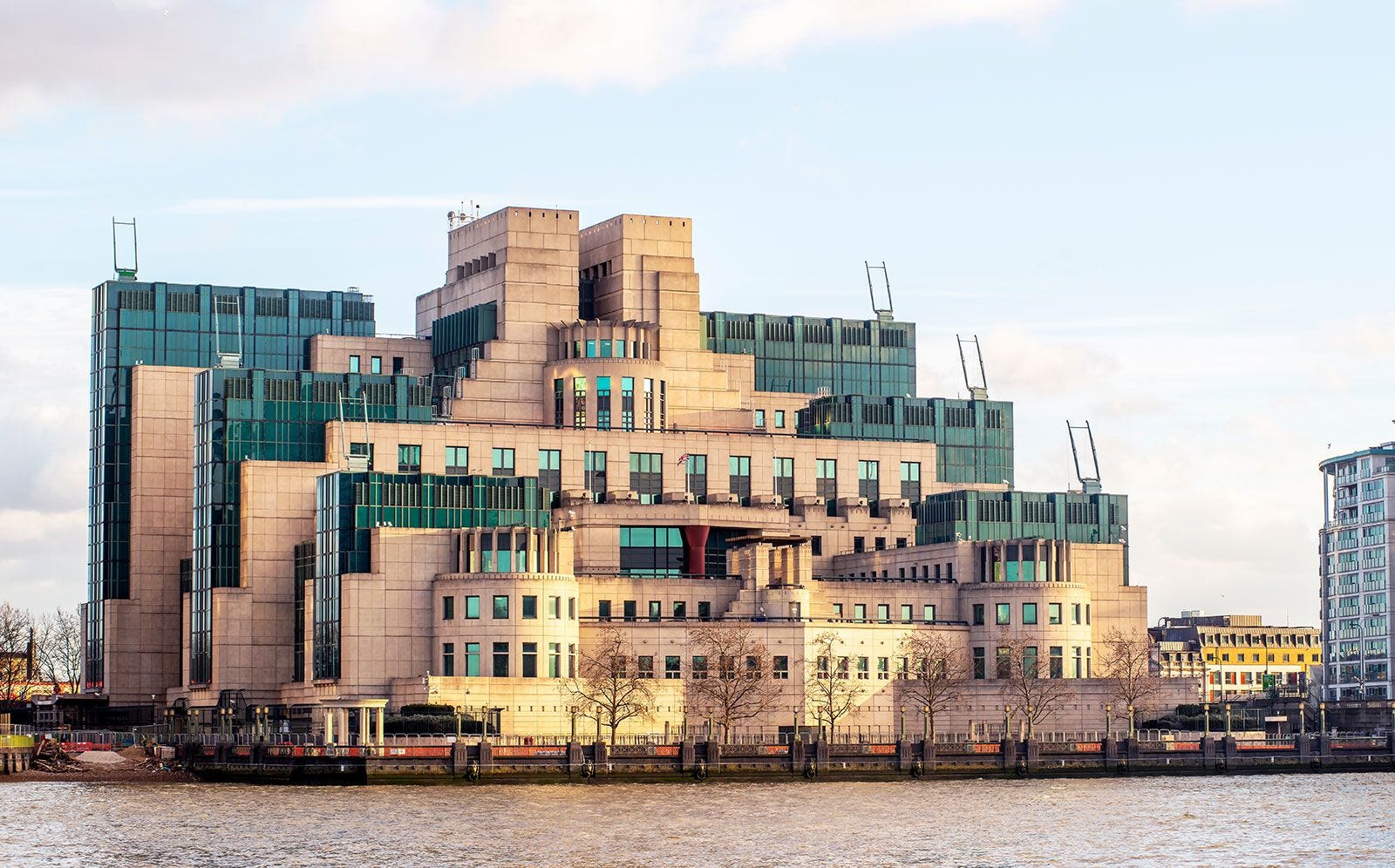
The British have long sought to undermine Russia from within. MI-6 dedicated significant resources into capitalizing on the collapse of the former Soviet Union by recruiting Russians who had given up on Russia and who had lost faith in what it meant to be Russian. Christopher Steele, the disgraced MI-6 operative who once worked in Russia as an intelligence operative, and later managed the Russia account for MI-6 in London, is a classic manifestation of how Russophobia is operationalized.
The primary vector used by foreign intelligence services to gain access into the Russian being has traditionally been the so-called “liberal Russian society”, intellectuals and entrepreneurs who were enticed by the promise of freedom and prosperity to betray their people, culture and nation.
The betrayal of Russia by these liberal elites did not necessarily manifest itself in obvious ways.
That, of course, is the evil genius of mental warfare—the battle isn’t necessarily in the physical realm, where it can be seen, but rather in the minds and souls of the combatants, many of whom may not realize that they are parties to an existential conflict.
The British, like their American counterparts, spent the decade of the 1990’s seeking to absolutely dismantle Russia, seeking to put an end to a nation that possessed so much unfulfilled potential.
They almost succeeded.
Only the coming to power of Vladimir Putin put a stop to their odious objectives.
For the next two decades, Uncle Sam and Perfidious Albion watched in frustration as Vladimir Putin orchestrated a national revival amongst the Russian people that reversed the self-destructive trends of the 1990’s and put Russia on a path of national rejuvenation. The end product—a nation populated by a people who know and love who they are, and are willing to defend their nation to the death—was not part of the post-Cold War world the US and UK were seeking to craft from the ruins of the Soviet Union.
The American response to the resurrection of Russia as a independent, sovereign state was to revert to the tactics and tropes of the Cold War, seeking to denigrate Russia in the minds of the American people through crude and crass Russophobia while physically containing Russia through the accumulation of political and military alliances that played upon the fears generated by the specter of a new Russian Empire.
The British, however, were playing a different game. Building upon a foundation of assets recruited by the Christopher Steele’s of the world during the moral vacuum that defined Russia in the 1990’s, the British sought to build networks of agents of influence who were deeply embedded in traditional Russian liberal society. While the United States sought to bludgeon our way into Russian society through promises of capital investments in exchange for political reform (all designed to undermine the rule of Vladimir Putin), the British played a different game—to infect the new Russia with the disease of Russian inadequacy, to create a mindset where Russian elites would flow capital out of Russia, denying the Russian people the benefits of having these resources reinvested into their nation, thereby weakening Russia and reinforcing the allure of the west even further. The goal was to get Russians to lose faith in Russia and, having done so, to willingly subordinate themselves to a west which would never embrace the Russian people as their equal.
In short, to create a permanent class of “new Serfs” who served western capital instead of a Russian monarch.
Ukraine has always played an integral role in the anti-Russian aspirations of both the US and UK. The anti-Russian reality of post-Soviet Ukraine manifested itself in numerous ways, but none more blatantly than the western efforts to empower malignant Ukrainian nationalism that had its roots in the odious ideology of Stepan Bandera in an effort to destroy Russia from within by creating the precedent of historic, linguistic, and cultural nullification of all things Russian. The election of 2004 serves as a prime example of this—this flagrant manipulation of the electoral process by western forces to achieve an outcome that saw a pro-Bandera Ukrainian nationalist (Viktor Yushchenko) usurp a popularly elected politician (Viktor Yanukovych) as the first step in nullifying Ukraine’s Russian reality.
The inherent corruption of Yushenko, and the fact that his brand of virulent Ukrainian nationalism did not resonate with most Ukrainians, allowed Yanukovych to return to office in 2010, only to be once again removed in a 2014 coup orchestrated by US intelligence that saw the pro-Bandera Ukrainian nationalists swept back into power. This coup triggered a military conflict in the Donbas between the Ukrainian nationalists and the Russian-speaking population of the Donbas that quickly morphed into a proxy war between NATO and Russia. The Minsk Accords of 2014-2015, ostensibly designed to bring about a negotiated end to the fighting in the Donbas, instead were used as a vehicle of Ukrainian empowerment leading to the crisis of 2021-2022, where a rejuvenated Ukrainian military, specifically trained and equipped by NATO, positioned itself to resolve the Donbas question through military force. This in turn triggered the Russian intervention in the form of the Special Military Operation.
The rest is history.
The West’s response to Russia’s decision to intervene in Ukraine was to transform the SMO into a broad-spectrum campaign, encompassing political, economic and military means, designed to bring about the strategic defeat of Russia.
This goal was to be accomplished through the economic collapse of Russia hastened by the advent of stringent and comprehensive economic sanctions, the political isolation of Russia facilitated through diplomatic interventions that capitalized on the perceived dominance of the hegemonic “rules based international order”, and the military defeat of Russia brought about by the investment of hundreds of billions of dollars into the arming and training of the Ukrainian military.
The response of the Russian government to this threat was to craft a pragmatic policy which sought to defeat sanctions by deftly deploying Russia’s diplomatic resources to build economic outlets that offset the elimination of normal western economic outlets, while simultaneously transforming Russia’s economy to one which was no longer dependent upon western capitol to survive. A major factor in this approach was to find viable global market outlets for Russia’s vast energy resources.
Russia also mobilized its considerable defense industrial potential, and exploited a growing Russian patriotic sentiment to build a military force capable of prevailing on the battlefield against the combined military resources of Ukraine and its western allies without resorting to mass mobilization. A critical aspect to this approach was the embrace of a model of war centered around attrition designed to wear down the warfighting potential of the Ukraine-collective west team while preserving to the maximum extent possible Russian lives and resources.
This pragmatic approach to warfare paid dividends for Russia, and by the summer of 2025 it was clear that Russia had irreversibly seized the strategic initiative from its Ukrainian-collective west enemy.
In short, Russia was on track to win the war. The policies of Vladimir Putin had created a economy not only largely immune to the destructive intent of sanctions, but which had flipped the script on Europe by turning their sanctioning of Russian energy into a major economic liability. Rather than face global political isolation, Russia had embarked on a diplomatic offensive built around the notion of the need to create a multi-polar alternative to the hegemony of the rules based international order. The political cohesion of the collective West likewise began to crumple, creating huge divisions between Europe and the United States that threaten the continued viability and survivability of the NATO alliance. And Russia’s military dominance on the Ukrainian battlefield was absolute, with the casualty figures decisively one-sided against Ukraine.
When the West spoke of the strategic defeat of Russia, whet they were seeking was the collapse of Russian society triggered by the combined effects of a failed economy, military defeat, and the resulting political alienation of the Russian government from the Russian people.
The goal was always a Russian Maidan, so to speak, a repeat of the Ukraine coup of 2014, only this time in the streets of Moscow.
There was a problem, however.
The Russian model of victory as presented above is predicated upon a traditional belief that the center of gravity of Russian opposition to Vladimir Putin was the very same pro-western liberal elites whom the West relied upon to facilitate the collapse of the Soviet Union and empower the disintegration of Russia in the decade of decline that was the 1990’s.
But the class of Russian liberal elites that once held sway during the time of Perestroika and the Yeltsin era of self-destruction had been largely neutered by the pragmatic policies of Vladimir Putin implemented as a result of the Special Military Operation and the West’s declaration of existential conflict with Russia.
Even the most discerning of Russian observers could be forgiven into accepting at face value the evident victory of Russia over the collective West, and the corresponding relegation into political irrelevance of the Russian liberal elites.
As such, when applying the principles of mental warfare to the perceived realities of the Special Military Operation, one might take umbrage at any notion of Russia undermining itself from within, of the existence of a political space where genuine opposition to the rule of Vladimir Putin could take hold and manifest itself in consequential fashion.
Russia, it seemed, had done a classic reversal, applying the tools of mental warfare on the west, creating the possibility of the collective West’s internal collapse.
Those in the West who suggested otherwise—Seymour Hersh and Gilbert Doctorow come to mind—were seen as being out of touch with reality, either serving as the direct or indirect vectors for anti-Russian propaganda.
Which, of course, they were, and are.
But mental warfare isn’t won by engaging in the direct approach of warfare.
That is the realm of traditional economic, political, and military affairs.
The so-called “art of war” where war is an extension of politics by other means.
Mental war preys upon the subconscious, creating situations where the synergy of the obvious manifests itself in unexpected ways.
Unexpected, that is, for everyone but the practitioners of mental warfare.
Enter Perfidious Albion and its agent of chaos, MI-6.
Under the guise of “keeping Ukraine in the fight”, the British have led a campaign designed to thrive within the parameters of Vladimir Putin’s pragmatic attritional approach to Russia’s conflict with Ukraine and the collective West.
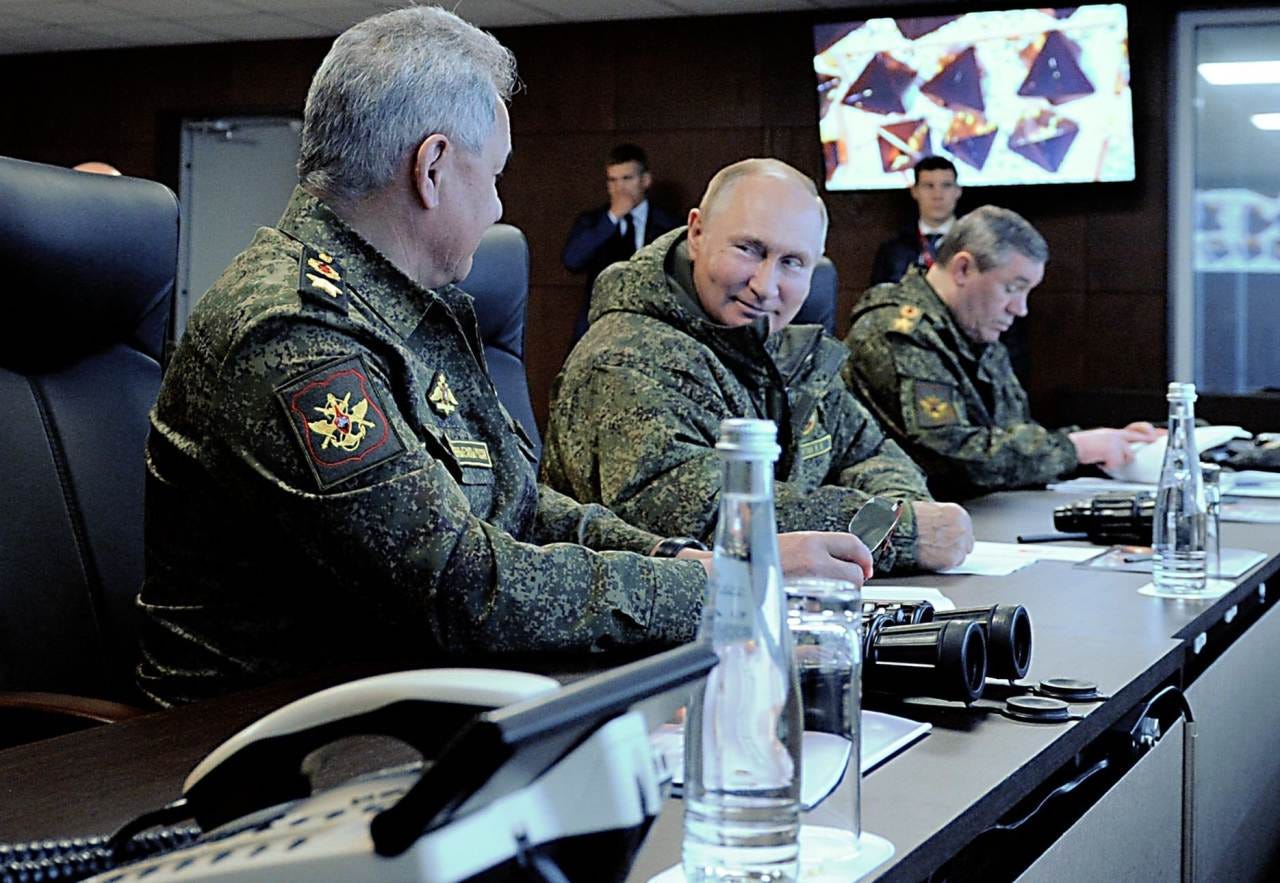
President Putin and his team have mastered the art of escalation management, keeping the West engaged enough to maximize resource commitment to the meatgrinder of the SMO while avoiding reaching the decision point where the West would either need to disengage or become directly involved.
When seen from a classic connect the dots analytical framework, the pragmatism of Putin was genius, positioning Russia to achieve a strategic victory against Ukraine and the collective West.
But when examined from the standpoint of mental warfare, the pragmatic path to victory was a strategic trap.
Putin’s goal was to win the war in Ukraine while keeping NATO from becoming directly engaged.
In this, he tolerated the collective West turning Europe into a massive logistics and intelligence base that operated in direct support of Ukraine while remaining outside the military reach of Russia.
So long as this European base was used to provide tanks, artillery, fighter aircraft, trained personnel and the intelligence to guide their actions on a conventional battlefield, Russia was willing to tolerate the repeated violations of notional “red lines”, since at the end of the day these violations did not manifest themselves to the existential disadvantage of Russia, but rather the exact opposite—the more resources the collective West poured into Ukraine, the weaker it got.
But the British began playing a different game.
First they facilitated attacks against strategic infrastructure such as the Crimean Bridge.
Then they began striking infrastructure targets in the vicinity of the SMO.
Then they began striking strategic targets, such as early warning radars, likewise in the vicinity of the SMO.
Then they carried out an audacious attack using drones launched from trucks that struck Russia’s strategic nuclear bomber force.
Then they began striking Russia’s strategic depth.
Oil refineries.
Critical defense industry.
Each time, these attacks—carried out by the Ukrainian military, but facilitated by the British and their allies in the West, including the US and Germany—violated Russian “red lines”.
And each time Russia refused to decisively respond because the conventional wisdom held that Russia was on the path toward victory and as such any response could trigger actions by the collective West, such as a major intervention on the ground in Ukraine—that would complicate this victory.
But each violation of Russia’s red lines represented an action designed to trigger opposition to Vladimir Putin inside Russia.
The conventional wisdom held that the traditional vector for such triggering moments—the Russian liberal elites—no longer possessed enough viability in Russian society to manifest themselves as an existential threat.
But the disenfranchised Russian liberal class was not the target of the British-designed actions of the Ukrainian government.
Instead, the British were targeting the very class of people President Putin was counting upon for victory—Russian patriots who had embraced the existential necessity for victory over Ukraine and the collective West, and whom were willing to do whatever was necessary to achieve this victory, even if it meant waging a war of attrition that lasted longer than the Great Patriotic War against Nazi Germany.
Ukraine and the collective West could not, and cannot defeat Russia on the battlefield of the SMO.
And the drone campaign to date, while embarrassing for the government of Vladimir Putin, has not moved the needle in any meaningful manner on the metrics one normally applies to modern warfare and the concepts of victory that such entails.
But these drone attacks have created a perception of weakness on the part of the Russian government which, if left unaddressed, could very well manifest itself among a segment of Russian population that has largely escaped the attention of western observers of Russia, focused as they are on the liberal elites. These are the patriots who are committed to Russian victory, and who have given everything possible to achieve such a victory.
The incessant Ukrainian drone attacks, implementing a vision and plan conceived by the British, have planted the seeds of defeat in the minds of those in Russia for whom defeat is not an acceptable option.
Putin’s pragmatism has in many ways been undermined by the policies of the Russian government itself. The Alaska Summit with President Trump stands as a prime example, breathing life into the notion of a “Spirit of Alaska” that never existed, at least from the standpoint of the collective West. Too late, Russian officials like Sergei Lavrov and Yuri Ushakov have openly acknowledged the death of this myth. But the perception of the Russian leadership embracing a western-generated framework of peace through compromise was already implanted in the minds of Russians who rejected the very notion of anything other than the unconditional surrender of their enemies.
Ukraine has crafted corridors through the Baltics and Kazakhstan through which they have launched attacks against critical infrastructure targets in the vicinity of Saint Petersburg and the Russian Urals using long-range drones.
Russia has allowed these corridors to remain open.
Ukraine has brazenly attacked Moscow, and then threatened to strike the Victory Day celebration, prompting a Russian threat of retaliation.
Yes, Ukraine did not attack Moscow on the days indicated, But they did so immediately after, helping create the perception that the parade only took place because Ukraine allowed it to take place.
The Saint Petersburg International Economic Forum is scheduled to convene in early June.
President Zelensky has openly bragged about a new plan for what he calls “long range sanctions”—the drone attacks against strategic Russian targets—for June.
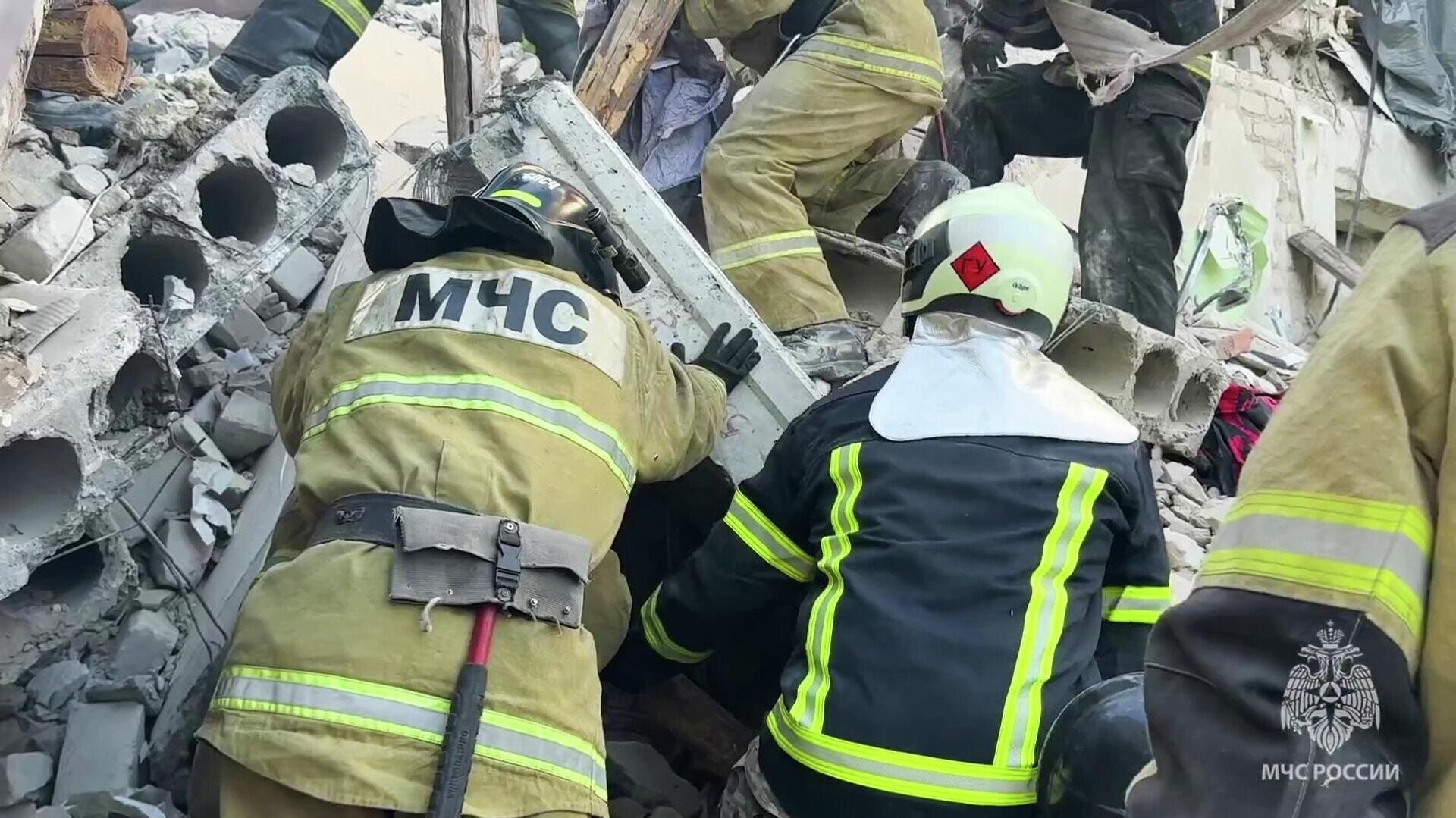
And now we have the drone attack on Starobelsk College.
The screams of the victims laying under the debris of the collapsed dormitory have long since fallen silent, only to be replaced by the anguished cries of relatives frantically searching for the bodies of their loved ones.
These cries echo throughout Russia, and are heard by those who see in the ruins of Starobelsk College the ruin of Russia.
Perfidious Albion is preparing to supply Ukraine with more than 20,000 drones in the near future.
Ukraine is talking about unleashing a mass attack of over 6,000 drones against Russia in the coming weeks.
Neither Ukraine nor the collective West can defeat Russia on the traditional physical battlefield.
But Ukraine, with the assistance of Perfidious Albion, is winning the Menta War.
Perceptions create their own reality.
And their is a growing perception inside Russia, among those who have up until this moment supported President Putin’s pragmatic approach toward victory in the SMO, that Russia is losing.
How this perception ultimately manifests itself has yet to be seen.
But if Ukraine is able to carry out massed attacks against Russia that possess an existential quality, the foundation of political support that President Putin has taken for granted throughout the SMO conflict could very well begin to disentigrate.
Not because Russia is losing the war.
But because Russians perceive Russia to be losing the war.
The current pragmatic model is an unsustainable model.
Russia is in danger of throwing conventional military victory away by ignoring the dangers posed by mental warfare.
For those who believe President Putin to be immune to any massive domestic political unrest, one only need reference the collapse of the Soviet Union.
The Soviet Union collapsed not because it had been defeated, but because the Soviet people—to include the Russian people—had lost faith in its continued viability.
The cries of the families of the victims of the Starobelsk College attack resonate throughout Russia.
These cries are not a cry for help, but a cry for action.
Action designed to reverse the infection of defeatism that has begun to infect the Russian mind and spirit.
The true effects of mental warfare only become apparent when it is too late to reverse course—one cannot shore up a building already in a state of collapse.
Russian victory over Ukraine must be manifested in a way that dramatically and decisively transforms the perception of the Russian people.
The physical battleground may be in Ukraine and Europe.
But the real war is being fought in the hearts and minds of the Russian people.
They do not need to hear about the potential of Russian victory while suffering under incessant Ukrainian drone attacks.
They need the drone attacks to end.
This means that the fate of Ukrainian decision making centers must be directly linked to any and all Ukrainian drone attacks on Russian soil.
Unconditional surrender cannot be a nebulous concept, but harsh reality.
Ukraine only gets one choice—surrender or die.
The Russian threat to eradicate the center of Kiev must become reality.
And then every city center of every Ukrainian city after that if Ukraine continues to launch drones against Russia.
The Baltic drone corridors must be shut down by force.
And the European manufacturing centers in the United Kingdom, Germany and elsewhere that have been building the drones used by Ukraine against Russia must be closed—either voluntarily or through kinetic intervention.
Russia must establish red lines that are fully and violently enforced.
These concepts may seem harsh, especially when contrasted with the patient pragmatism Moscow has previously embraced.
But Russia is losing the mental war.
The disease of defeatism has already begun to infect the Russian mind and spirit.
And the only antidote for defeat is absolute victory, absolute manifested in the unconditional surrender of Russia’s enemies.
On the morning of May 22, 2026, death came in the dark for the students of Starobelsk College.
Russia has a stark choice before it: turn the horrific sacrifice of these children into a call to arms and ultimate victory, or let this tragedy become the opening chapter of a volume later historians will entitle “the Fall of Russia.”
(I will be travelling to Russia soon, where I will be expounding on the themes raised in this article, pursuing pathways of peace, avoidance of nuclear war, and the betterment of friendship between Russians and Americans. The continued support through donations makes this trip, and others like it, possible.)
Thanks Scott.
Yes, time to fight back. Strike the 'leaders' of this disgusting Russiaphopia (Great British England) first.
This article, and the information in it, are fabulous. Thank you, Scott. I will never pretend to be any kind of an authority on Russia and its future. After visiting Russia three times with my husband, and seeing first hand the devotion of the Russians to their country and Pres. Putin, the West should not ever underestimate how strong that devotion is. The West has the "Russia forever enemy" mentality because they don't want, or are too lazy, to do any actual Research into Russia. It will be to the detriment of the West to underestimate how strong Russians are to protect their country.