

Getting it Wrong on Russia
When a reporter becomes hostage to his sources, the results are little more than weaponized propaganda.
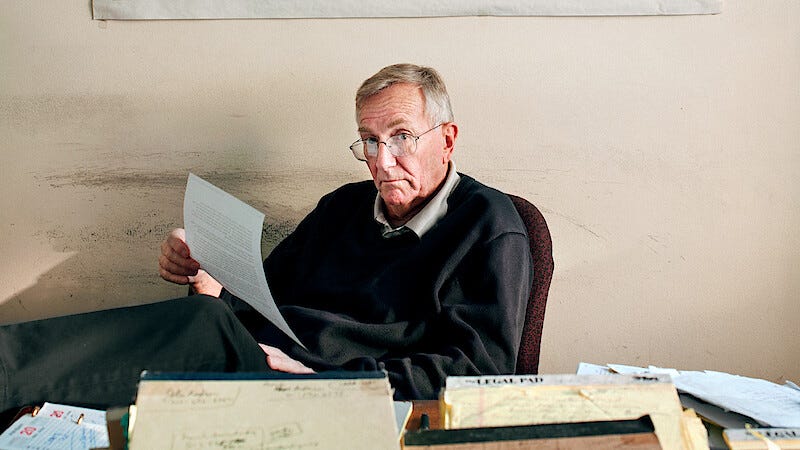
Seymour Hersh, or Sy to those who know him, is a legendary Pulitzer Prize winning investigative journalist who happens to have a very influential Substack page that has attracted some 233,000 subscribers since he published his first article, “How America Took Out The Nord Stream Pipeline”, back in February 2023.
I’m a big fan of Sy, and for the past 26 years I have been privileged to call him friend.
And it is as Sy’s friend that I am compelled to address his most recent Substack article, “Putin’s Long War.”
Allow me to set the stage.
I’ve had the honor and privilege of interviewing retired Lieutenant General Andrei Ilnitsky, a former senior advisor to Russian Defense Minister Sergei Shoigu. Andrei is a very calm, rational man possessing razor sharp intelligence and deep insights into the reality of the modern world. Andrei is the proponent of a form of informational warfare he calls “Mental War”, which he first publicly detailed in an interview to the Russian military journal Arsenal of the Fatherland in March 2023.
Mental War, Andrei postulates, has its own strategic goals and objectives. “If in classical wars the goal is to destroy the enemy’s manpower [and] in modern cyber wars [it is] to destroy the enemy’s infrastructure,” Andrei says, “then the goal of the new war is to destroy self-consciousness, to change the civilizational basis of the enemy’s society. I would call this type of war ‘mental.’”
Importantly, Andrei notes, “while manpower and infrastructure can be restored, the evolution of consciousness cannot be reversed, especially since the consequences of this ‘mental’ war do not appear immediately but only after at least a generation, when it will be impossible to fix something.”
It is important to point out that the United States has been waging “mental war” against Russia in a concerted fashion since 2009, when President Obama and Michael McFaul colluded on the fiction of a “Russian reset”, which was little more than a policy of regime change disguised as diplomacy.
The “Russian reset” gambit failed because of the crude manner in which it was implemented, will little effort being made to disguise the true objectives of the policy—no one believed that the Russian political opposition was little more than the proxy of the United States, trying to take down the government of Vladimir Putin from within by promulgating a falsified narrative of systemic corruption that even the most cynical Russians failed to embrace. And by dispatching Joe Biden to Moscow in March 2011, the Obama administration ended up exposing its sordid plans for all of Russia to see.
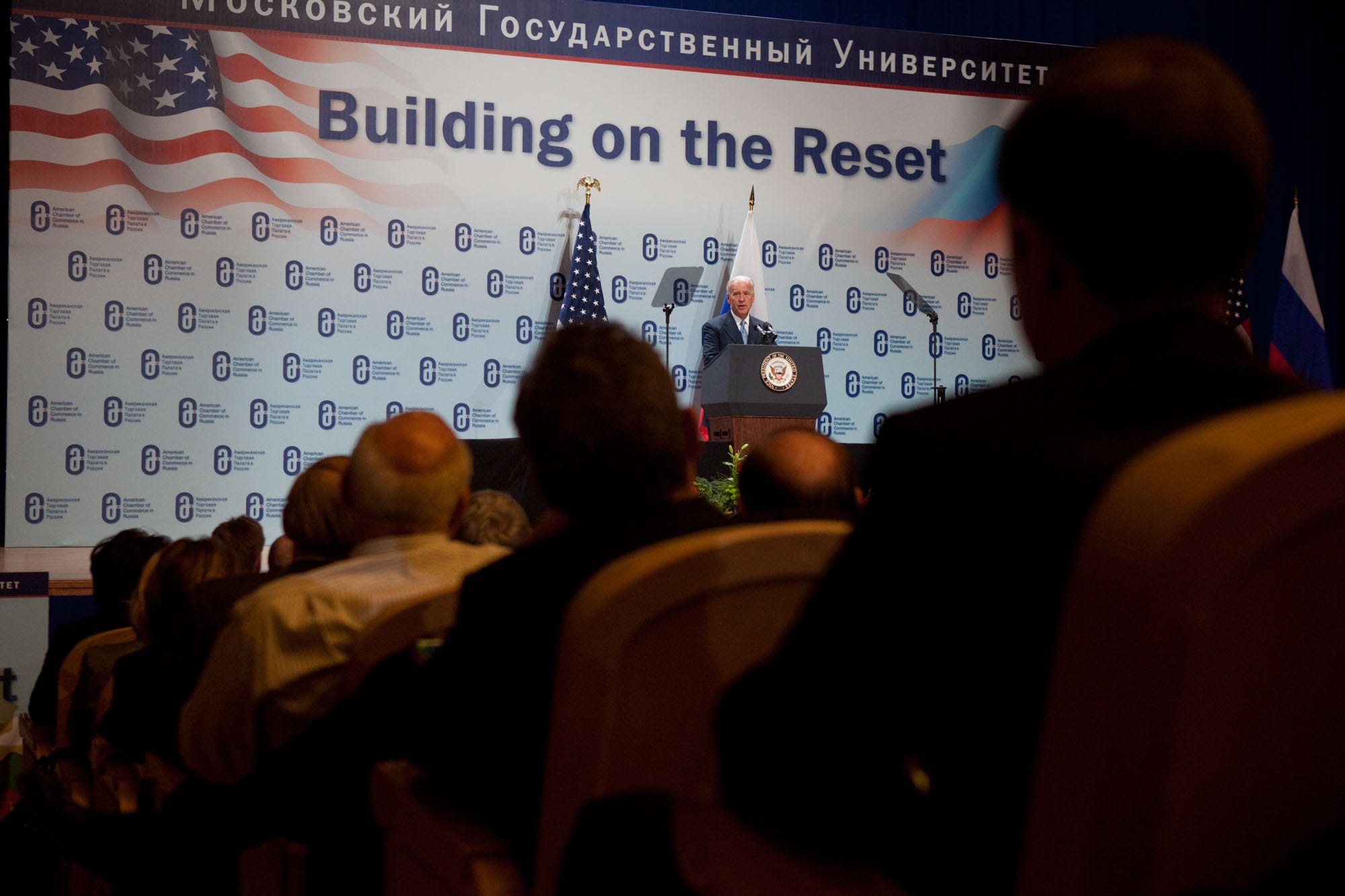
On March 10, 2011, Biden addressed an audience at Moscow State University, where he touched on this very reset, framing it as a necessary and natural course correction needed by both countries. “President Obama and I proposed forging a fresh new start by, as I said in the initial speech on our foreign policy, by pressing a restart button, reset button. We wanted to literally reset this relationship, reset it in a way that reflected our mutual interests, so that our countries could move forward together.”
Keeping in mind that the goal of “mental war” is to destroy self-consciousness and change the civilizational basis of the targeted society, then Biden’s speech begins to take on a whole new character. “Consider the following statistics, or polling,” Biden told the assembled students. “In December of 2008, one month before we were sworn in as President and Vice President, polling showed that only 17 percent of all Russians had a positive opinion of the United States—17 percent! This year, that number has jumped to over 60 percent. Our goal is to have it continue to climb.”
In short, Biden was manufacturing Russian consent for the goals and objectives of the Obama administration, planting the notion that a majority of Russians were in favor of the changes he was promoting.
Biden echoed the past focus on market economics that drove US policy in the decade of the 1990’s, following the collapse of the Soviet Union. “American venture capitalists and other foreign investment is flowing into the Russia’s economy to allow it to diversify beyond your abundant natural resources—metals, oil and gas—and help Russian start-ups get their ideas to market,” Biden said. “Those of you who are studying business know that it’s one thing to have an idea, it’s another thing to get to market. It takes people willing to make a gamble, make an investment, make a bet.”
Biden was clearly insinuating that America was ready to take a gamble of Russia.
But there was a catch. “This is one of the reasons the President and I so strongly support Russians accession to the World Trade Organization,” Biden declared. “Accession will enable Russia to deepen its trade relations not only with the United States, but the rest of the world. And it will give American companies a greater and more predictable—important word, predictable—access to Russia’s growing markets, expanding both US exports and employment.”
Then the other shoe dropped.
“I think that’s why so many Russians now call on their country to strengthen their democratic institutions,” Biden said, before listing a series of conditions.
“Courts must be empowered to uphold the rule of law and protect those playing by the rules.”
“Non-governmental watchdogs should be applauded as patriots, not traitors.”
“And viable opposition—and public parties that are able to compete is also essential to good governance,” Biden added. “Political competition means better candidates, better politics and most importantly, governments that better represent the will of their people.”
There was more. “Polls shows that most Russians want to choose their national and local leaders in competitive elections.” Once again Biden referred to polls, as if these ideas he was espousing came from the Russians themselves, and not CIA overlords who manipulated the polls Biden was quoting to create just this perception. “They want to be able to assemble freely, and they want a media to be independent of the state. And they want to live in a country that fights corruption.”
Mental War.
“That’s democracy,” Biden declared. “They’re the ingredients of democracy. So I urge all of you students here: Don’t compromise on the basic elements of democracy. You need not make that Faustian bargain.”
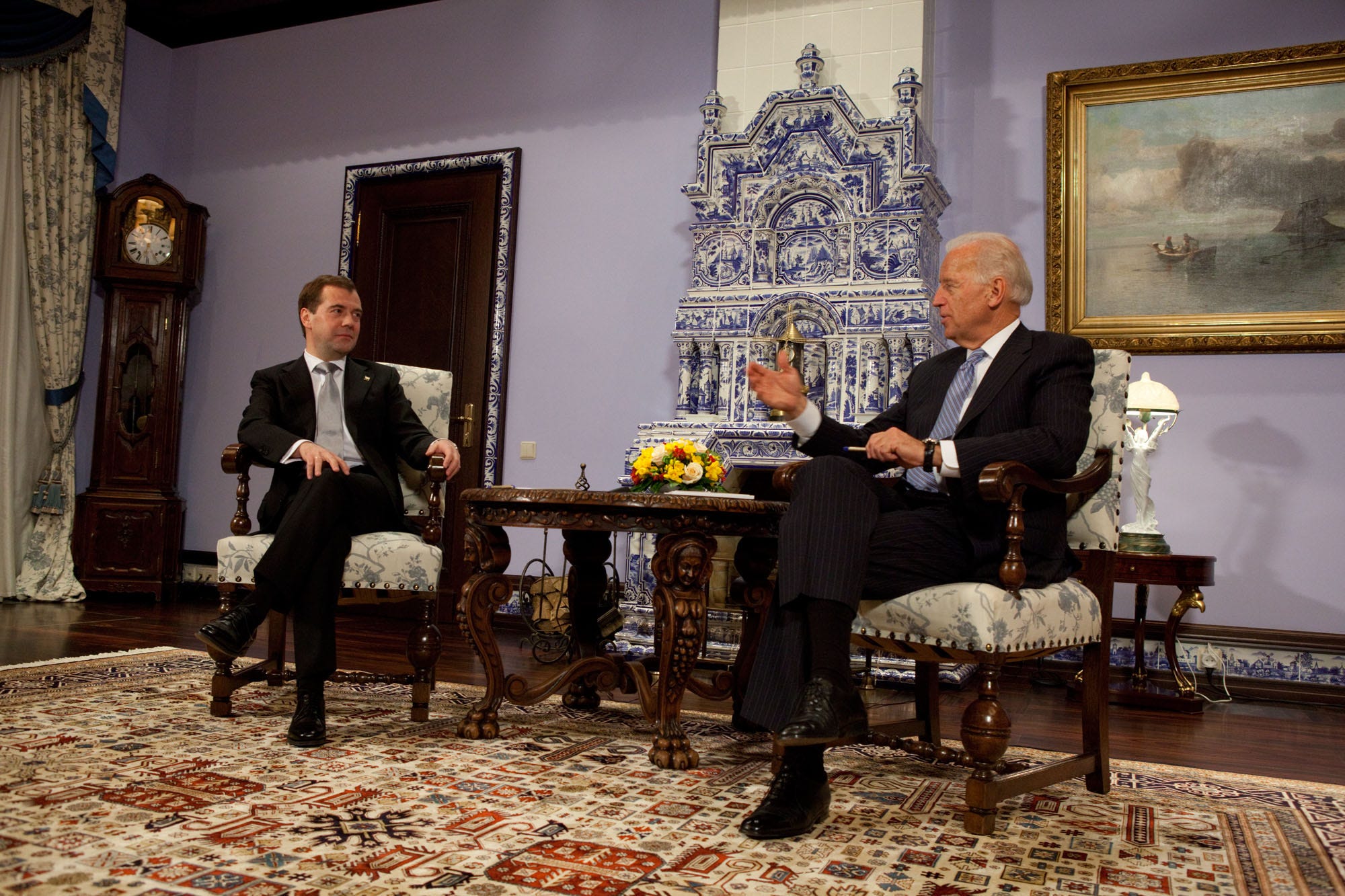
And again, the audience was told that these were Russian ideas. “And it’s also the message I heard recently when President Medvedev said last week—and I quote him—“freedom cannot be postponed.” Joe Biden didn’t say that. The President of Russia said that.”
And again. “And when Deputy Premier and Finance Minister Kudrin said that ‘only fair elections can give the authorities the mandate of trust we need to help implement economic reforms.’ That’s a Russian leader, not an American leader.”
“Russia and America both have a lot to gain if these sentiments are turned into actions,” Biden concluded, “which I am hopeful they will be.”
The curious thing about Biden’s speech is that it was almost immediately able to be compared and contrasted with remarks he made later the same day to Russian opposition leaders in a private meeting at the US Ambassador’s Spaso House residence.
Forget the Russian people forging their own way forward on their path to democracy—the Obama White House openly opposed a third presidential term for Vladimir Putin, with Biden telling the assembled political opposition that it would be better for Russia if Putin did not run for re-election in elections scheduled for March 2012.
According to Boris Nemtsov, one of the main political oppositionists whom Biden was seeking to empower through his visit , “Biden said that in Putin’s place he would not stand for president in 2012 because this would be bad for the country and for himself.” A report in Nezavisimaya Gazeta, a Moscow daily newspaper openly sympathetic with Russia’s political opposition, published a week before Biden’s visit, stated that the American Vice President’s main goal for visiting Moscow was to press Russian President Medvedev into seeking re-election, thereby squeezing out Vladimir Putin, whom the report said would be offered as consolation the presidency of the International Olympic Committee.
This was the essence of Biden’s mission—regime change disguised as American diplomacy.
Biden’s mission ultimately failed—Vladimir Putin was elected to a third term in elections held in March 2012 where he received 64% of the vote with 65% turnout (by way of comparison, Barack Obama won the 2008 US Presidential race with 53% of the vote, and just under 62% turnout.)
But it has been the goal of the United States since that time to bring down Vladimir Putin, to collapse Russian society, and to return Russia to the status it held in the 1990’s as a defeated nation completely subordinated to the will and direction of the United States.
The messaging that is attached to these goals is consistent with those articulated by Joe Biden in March 2011—that the key to Russian prosperity is its absorption into a market economy controlled by the United States, and that the necessary precondition to gaining access to the venture capital and market expertise offered by the United States is the removal of Vladimir Putin from power.
Which brings us to the issue at hand—Sy Hersh’s latest piece, “Putin’s Long War.”
Sy has long been critical of Russia’s actions in Ukraine.
This, of course, is his prerogative.
And Sy is no Russophobe—I have known him for more than quarter century, and I have always found him to be balanced in his approach to covering matters pertaining to Russia, including those that address Russia’s leader, Vladmir Putin.
But Sy is a reporter, which means he is in many ways a prisoner of his sources. His journalistic instincts have proven him right many more times than they have failed him. In the Netflix documentary Coverup, which came out last year, Sy is asked about his reporting style, which relies heavily on unnamed sources. “People, for a lot of reasons,” Sy said, “they talk. They talk to me.” The key, Hersh noted, “was get out of the way of the story.”
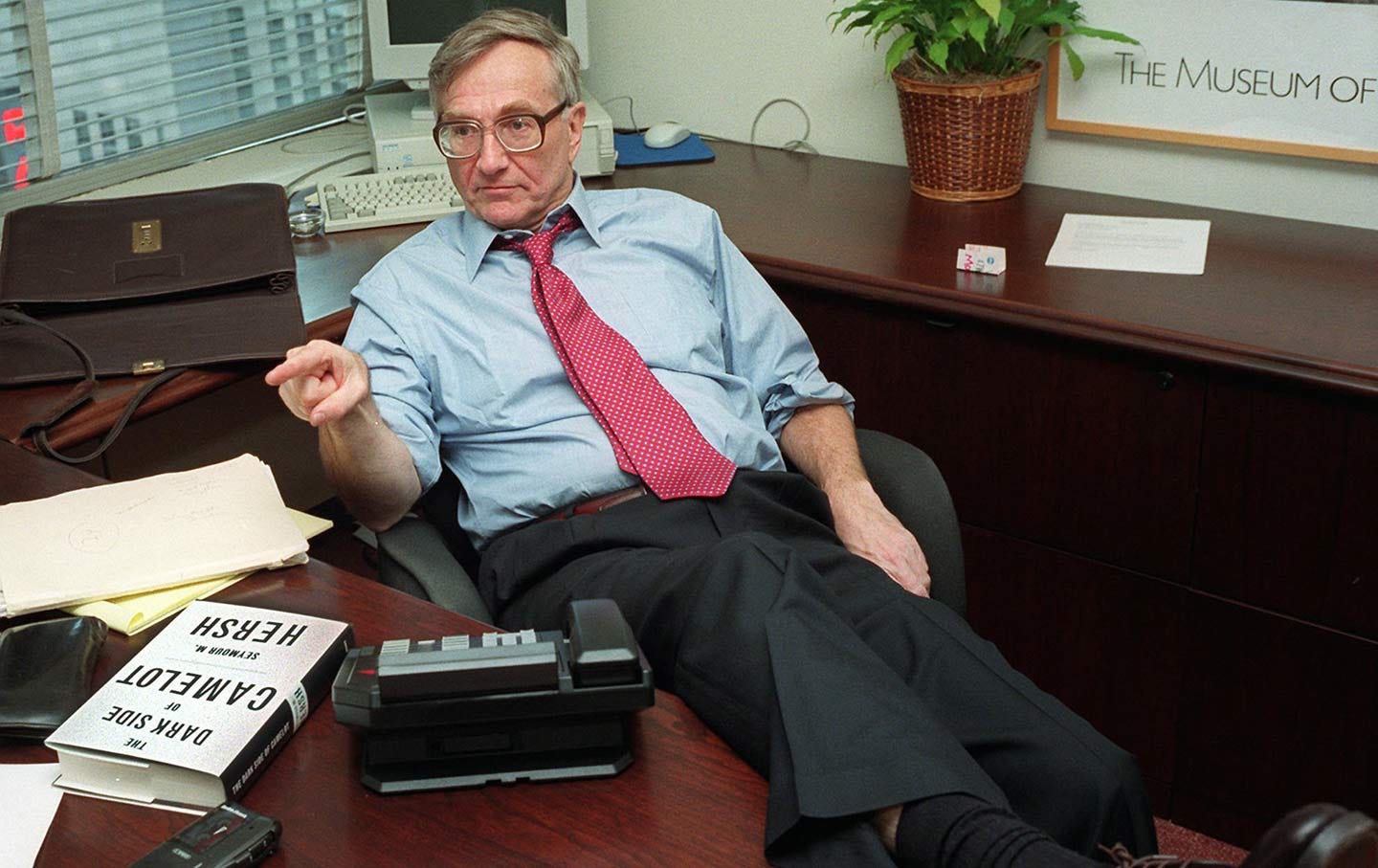
But there were times when a reporter needs to jump in front of a story, or else it will get away from him like a runaway train. This was the case of a sensational book Sy wrote about John F. Kennedy titled The Dark Side of Camelot. Sy had incorporated material into the initial draft of the book which was derived exclusively from documents he received from Lawrence X. Cusack Jr. These documents turned out to be forgeries, forcing Sy to remove a complete chapter from his manuscript, as well as making additional changes to the rest of the manuscript. Cusack was later convicted of fraud, and sentenced to nine years in prison.
It should be noted that Cusack’s fraud was detected because of the due diligence Sy Hersh conducted in an effort to confirm the information contained in the documents—outstanding journalistic practice of the sort one would expect from a winner of the Pulitzer Prize.
In his most recent article, “Putin’s Long War,” Sy could have benefited by getting in the way of the story, and conducting some rudimentary due diligence.
This is because, in my opinion, Sy’s sources—”US intelligence officials” who have “been involved in Russian issues for decades”—are spoon feeding Sy information about Russia that is as fraudulent as anything contained in Cusack’s documents.
First and foremost, if your source is an intelligence official focused on Russia for “decades”, then their entire career has been centered on the issue of discrediting and undermining Russian President Vladimir Putin, who has been in power now more than a quarter century.
It also means that they were more than likely involved in the “Russian reset” regime change operation orchestrated by the Obama administration, and spearheaded by Joe Biden.
This alone mandates that a heavy bit of skepticism be maintained when dealing with any information such a source may provide about Russia.
But then there is the “smell test.” There was a time when Sy would call me up and bounce ideas off me, some of which tested information that was provided by his sources. I remember one time, early in the Afghanistan War, when Sy called about some Special Operations missions being conducted in Afghanistan. He described the actions of Delta Force, an elite Army commando unit, but used the terms “Company”, “Platoon” and “Squad” when describing them.
“Are these direct quotes?” I asked.
Yes, Sy said.
“And your source claims he is with that community?”
Again, Sy responded in the affirmative.
“He’s not Delta”, I said of the source.
Delta operators, I explained, operate as part of a Squadron, Troop, and Team, and any discussion of their operations would make use of such terminology.
Sy pressed the source, and discovered the truth—he was not who he claimed he was.
I just wish Sy had called me about his Russia story.
Not only is the provenance of the claims set forth in article questionable—the US intelligence community is composed almost entirely of Russophobes dedicated to spreading misinformation about Russia and its leader—but the actual data defies belief.
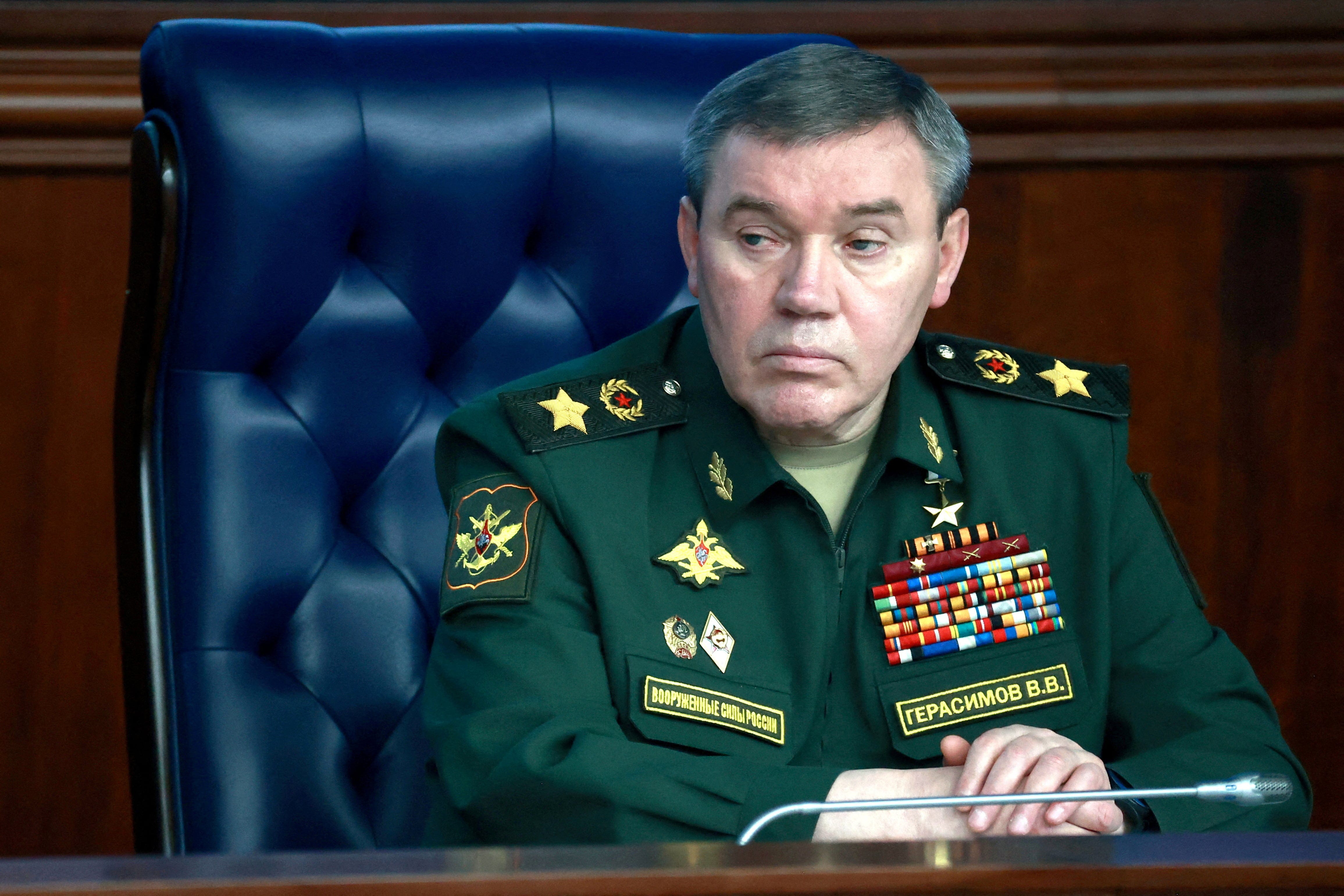
At one point in the article Sy, quoting this “official”, quotes Russian General Valery Gerasimov, the Chief of the Russian General Staff, as lamenting “I no longer have an army. My tanks and armored vehicles are junk, my artillery barrels worn out. My supplies intermittent. My sergeants and mid-grade officers dead, and my rank and file ex-convicts.”
It is highly unlikely—indeed, nigh on impossible—that Gerasimov ever said such a thing. This is the highest ranking officer in the Russian military, and a close and personal confidant of the Russian President. Such a statement from a man in his position, even if true, would be tantamount to treason.
The main problem, however, is that the points ostensibly being made by Gerasimov are not only contradicted by reality, but—which is something Sy should have picked up on—match trope for trope the propaganda points being put out by the Ukrainian government and its supporters in the West—including the US intelligence community, which helps write most of them on behalf of the Ukrainians.
The Russian army is widely recognized as the most lethal combat force on the planet today.
Russian tanks and armored vehicles have been shown to be far more survivable than their western counterparts.
While Russia once had a minor supply issue regarding artillery barrels, this is no longer the case—Russia has sufficient production capacity and, moreover, the nature of the war today, where drones have not only taken over a significant part of the front-line fire support duties and responsibilities, but also locate and provide direct observation of Ukrainian targets which are destroyed using precision fires, obviate the need for the kind of massed fires that wore out Russian artillery barrels in the early phases of the conflict.
The Russian army is one of the best supplied combat forces in the world, and the practice of rotating troops out of the front lines, resting them, refurbishing them, and training them on the latest techniques ensures Russia maintains a qualitative edge over their Ukrainian counterparts.
Russian casualties are but a fraction of those inflicted on the Ukrainian military, and the Russian NCO’s and mid-grade officers are thriving, not dying.
Yes, the Russian army makes use of convicts, but they are a tiny fraction of the tens of thousands of volunteers who fill the ranks of the Russian army every month.
I don’t know how many times Sy’s source has been to Russia, or whether or not the source has been to Russia since the Special Military Operation began.
I’ve been five times, including travel to Crimea, Kherson, Zaporozhia, Donetsk, and Lugansk.
I’ve interviewed Russian Generals, Colonels, Lieutenant Colonels, Majors, Captains, Lieutenants, and Sergeants.
Men who have served, and are currently serving, on the front lines.
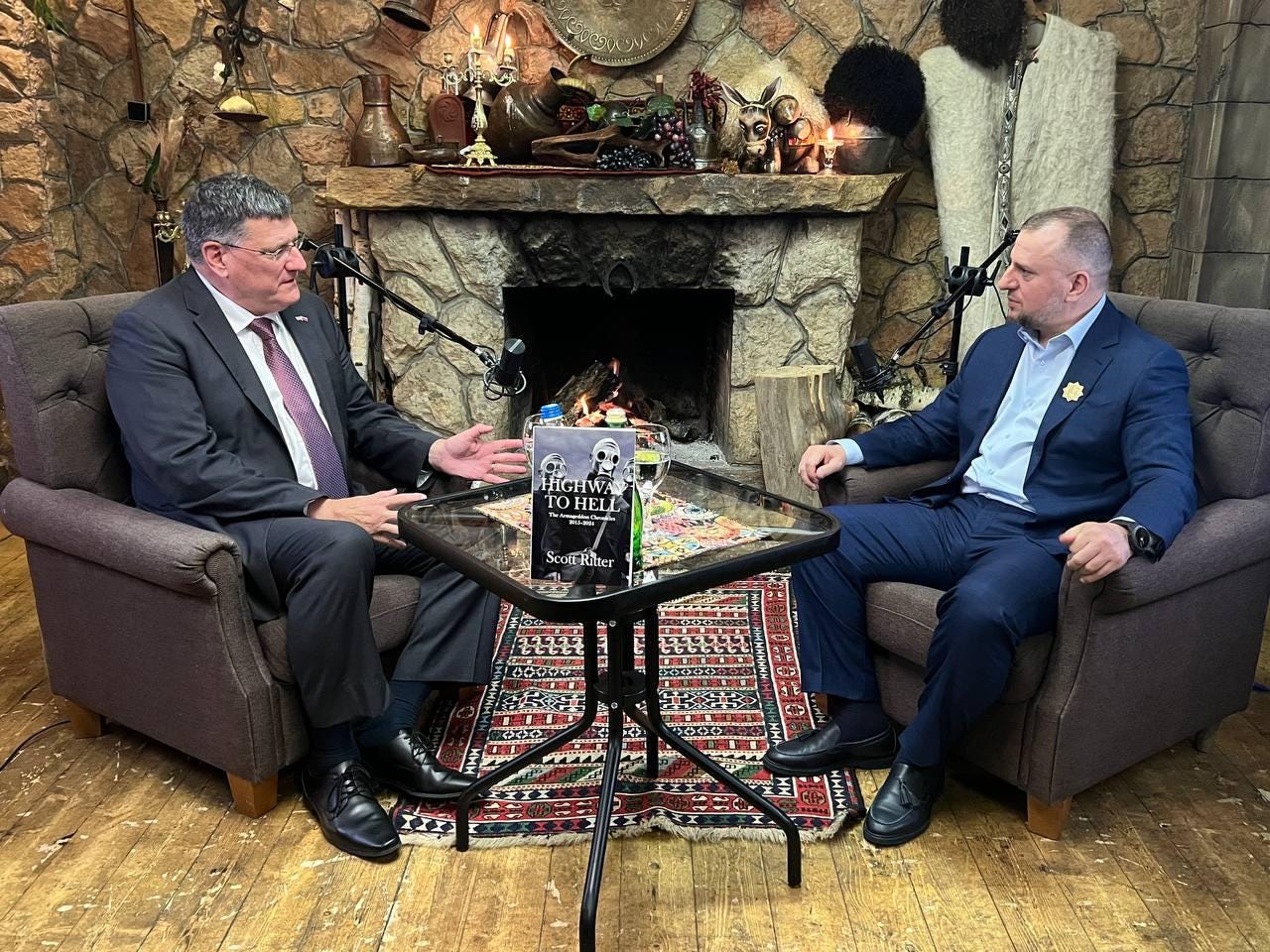
I’ve travelled Russia extensively.
I’ve spoken with people intimately involved in the Russian economy.
Literally nothing Sy’s source says rings true.
The idea of their being a viable political opposition to Vladimir Putin that seeks to promote his downfall is as absurd as the day is long.
And the fact that Sy drew upon the reporting of two vehemently anti-Putin activists who are in self-imposed exile from Russia only underscores the fundamental weakness of his reporting in this regard.
Alexandra Prokopenko was a minor official in the Russian banking industry who fled Russia after the Special Military Operation began, taking refuge in the Carnegie Russia Eurasia Center in Berlin. The Carnegie Russia Eurasia Center is headed by Alexander Gabuev, who leads a team of analysts who were formerly part of the Carnegie Moscow Center, which was forced to close by the Kremlin in early 2022, after nearly three decades of operation, because of its status as an “undesirable” activity funded by foreign sources of money derived from entities hostile to Russia.
Prokopenko and the others continue their openly anti-Russian activities in Berlin today.
Alexander Kolyandr is a Senior Fellow with the Democratic Resilience Program at the Center for European Policy Analysis, an openly Russophobic public policy institution headquartered in Washington, DC that promotes a trans-Atlantic (i.e., NATO) agenda.
Both Prokopenko and Kolyandr are Ukrainian.
They co-author a weekly report, Inside the Russian Economy, where they consistently promote a narrative that is negative on Russian economic health. Their most recent column, published on January 17 and to which Sy apparently references, is titled “Russia’s hidden economic weak points: What to watch in 2026.”
Inside the Russian Economy is a feature in the online Russian independent economic news outlet, The Bell, founded by a trio of anti-establishment Russian journalists, Irina Malkova, Petr Mironenko, and Elizaveta Osetinskaya, who today operate in exile from the San Francisco Bay area.
Sy reports that Prokopenko and Kolyandr’s January 17 article was “circulating in some government offices in Washington.”
This is a meaningless observation, which seeks to give credibility to a source that has zero credibility when it comes to the reality of Russia and its economic performance. Long-range sniping done by people physically disconnected from Russia, and intellectually programed to find anything negative about Russian economic performance, is not the standard that one is normally looking for when seeking fact-based analysis about complex issues. This past November I spend 19 days in Russia meeting and interviewing experts on the Russian economy. Sy would have benefited from the insights these experts had on what is really going on economically in Russia, instead of breathing life into Russophobic tropes designed to promote a larger picture of a Russia in trouble, where “disillusionment and resentment are increasing” and Vladimir Putin is facing “increased domestic unrest.”
Sy has been writing on Russia and the Ukraine conflict for some time now, and I have had similarly negative reactions to those articles and their over reliance upon unnamed sources who claim to have special access to Russian policy questions, but exhibit absolute ignorance about Russian reality. So why have I chosen to bring attention to this article at this time?
To be honest, this is not something I wanted to do. Sy is a very good and close friend, and this will always be the case. But the fact is Sy is being played by forces within the US government who are waging “Mental War” against Russia. Normally, such an argument would be mooted by the fact that Russia is not normally responsive to western propaganda published in western outlets, if for no other reason that pushing Russophobic nonsense on an inherently Russophobic audience serves the same function as a self-licking ice cream cone, “analysis” that exists primarily to justify its own existence.
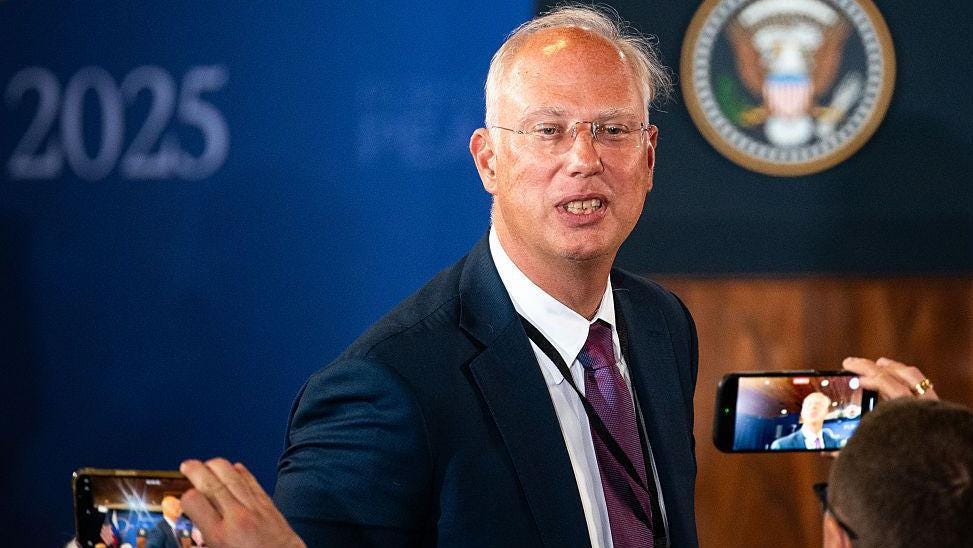
But since the Alaska Summit of August 2025, there is a new dynamic that alters how this western propaganda is viewed by Russians inside Russia. The so-called “Spirit of Alaska” has taken on a life of its own, with the prospect of economic prosperity linked to the negotiated end of the Russian-Ukrainian conflict increasingly resonating within certain circles of Russian economic and political elites. A critical aspect of this “Spirit of Alaska” is the ongoing dialogue between Kirill Dmitriev, President Putin’s designated interlocutor with Trump’s point man on Russia, Steve Witkoff. This dialogue, extensively promoted by Dmitriev, focuses on the economic benefits that will accrue for Russia once the war with Ukraine ends and economic relations with the US begin.
Perhaps unwittingly, Dmitriev has helped create the very psychological impressions on the Russian people that Joe Biden attempted back in March 2011, when he extolled the benefits of American venture capitalists investing in the diversification of the Russian economy from being focused simply on how to extract its natural resources, to bringing these resources to market.
But the “Spirit of Alaska” economic boom is predicated on the same thing Biden’s promise of a better Russian future hinged on—the removal of Vladimir Putin from office.
The “Spirit of Alaska” is simply the Biden regime change policy reimagined under Donald Trump.
The goal isn’t to convince those who already hate Russia to hate Russia more, but rather to impress upon a critical segment of Russian society that all is not well, and that the solution lies in deep and meaningful political change at the top.
This is where Sy Hersh comes in.
He is a Pulitzer Prize winning investigative journalist held in high regard by the Russians, especially after his reporting on the destruction of the Nord Stream Pipeline.
Sy has credibility within Russia, and as such, his reporting is read by many in Russia inclined to view his writing in a positive fashion. If a journalist like Sy Hersh commits to a given narrative, the American practitioners of “Mental War” believe, then that narrative has a chance of taking hold inside Russia, creating societal tensions that could potentially be exploited by foreign intelligence services hostile to Russia, including the CIA.
Sy’s reporting is being hijacked by sources whose real purpose is to seed ideas and information into the public discussion, creating an echo chamber in the West that reaches back into Russia, where it is used to fuel resentment, dissent, and opposition.
Sy has become a tool of regime change in Russia, a role I believe he neither sought out, or believes he is playing.
But as an old Russian hand myself, who has been watching the games played by the US intelligence services inside Russia for some time now, this is precisely the role Sy is playing, something his sources and their handlers intended when the decision was made to put the sources and Sy together for this reporting.
I have been approached by several old Russian hands about Sy’s most recent article. At least one has reached out to Sy directly about this article, to no avail.
I believe Sy’s new article is harmful to Russia, because what it reports simply is not true.
It is bad for peace because it gives life to the false hope that Russia is teetering on the bring of economic and political collapse, thereby encouraging the Ukrainians and their western supporters to keep dragging the war on, despite the horrific losses (economic and human) being sustained by Ukraine.
It is bad for journalism if for no other reason than it is bad journalism—the sourcing is suspect, and the underlying analytical framework weak.
But most importantly for me personally, it is bad for my good friend, Sy Hersh. The man who broke the story of My Lai and Abu Ghraib, the intrepid investigative journalist who graced the pages of the New York Times and The New Yorker back when both outlets were deemed to be credible journalistic institutions, should not allow his name to be attached to what is clearly a propaganda exercise designed to destroy Russian self-consciousness and change the civilizational basis of Russian society—in short, to wage “Mental War.”
Sy Hersh, long the gold standard for truth in journalism, should not allow his reputation to be tarnished by becoming a weapon in the “Mental War” being waged by intelligence operatives in Washington, DC against Russia.
And yet, by publishing his article, “Putin’s Long War”, this is exactly what has happened.
The Sy Hersh that I know and love, the man I call friend, would never allow himself to be used as a cheap propogandist.
I just want to bring this to the attention of my good friend, and hope that he acts accordingly.
Scott explains well what happened to Sy Hersh, a long time go to reporter for me. I could hardly believe my eyes when I read his article and wondered how he could write it. Thanks, Scott, for clearing this mishap up. It hurt, since Sy Hersh as been so great, right up to this.
I was sure that you would react! I was chocked yesterday reading it ! It’s serious because of his fame ! Hope your comments will be shared as wide as possible. I will share today in French !